
Why Cable Recyclers Are Switching from Burning to Mechanical Granulation
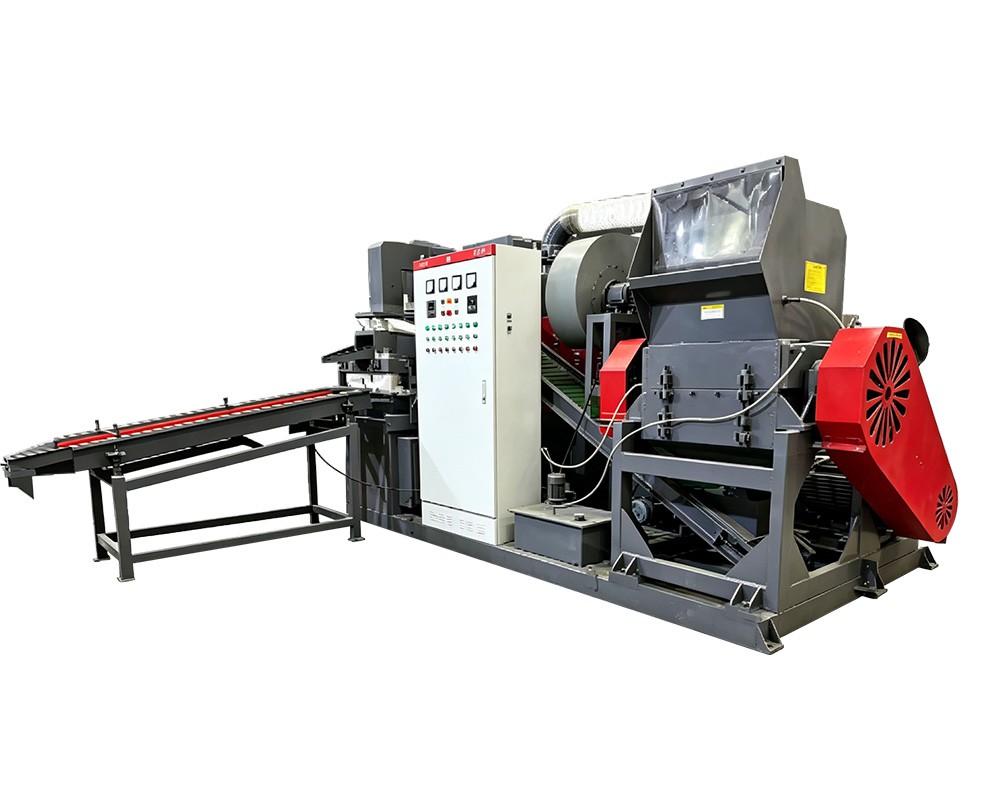
Why Cable Recyclers Are Switching from Burning to Mechanical Granulation
Published in News & Insights · Industry News
By Henan Jiacui Intelligent Equipment Co., Ltd.
Burning insulation off scrap cable is the oldest copper recovery method in existence, and it is being abandoned almost everywhere that enforcement reaches. The reasons are sometimes presented as purely environmental. In practice three forces are converging: the chemistry of what burning produces, the legal exposure it creates, and a straightforward commercial penalty that most operators only discover when they try to sell the result.
This article sets out all three, compares burning with mechanical granulation on the measures that matter to a recycling business, and describes what the transition actually involves.
1. The chemistry: why cable is a particularly bad thing to burn
Not all burning produces the same emissions. Cable is unusually problematic because of what it contains and what it is made of.
PVC insulation supplies both carbon and chlorine. Copper is an effective catalyst for the formation of polychlorinated dibenzo-p-dioxins and dibenzofurans — the ‘dioxins’ — in low-temperature, oxygen-poor combustion. So the two ingredients that make cable valuable and cable cable are precisely the two ingredients that make an open burn efficient at producing persistent organic pollutants. This is not a marginal effect; it is why cable burning is treated as a distinct category of problem rather than as ordinary waste burning.
The emission profile of an uncontrolled cable burn typically includes hydrogen chloride, carbon monoxide, sulfur dioxide, heavy metals where lead stabilisers are present, and particulate matter, alongside the dioxins and furans. The residue does not disappear: dioxins are persistent, they accumulate in soil and sediment, and they bioaccumulate up the food chain. A burn site remains contaminated long after the fire is out.
2. The legal position: it is prohibited, and enforcement is getting better
In the United States, the Clean Air Act prohibits the open burning of coated wire for metal recovery. Published summaries of the enforcement position cite daily penalties that can reach tens of thousands of dollars and, in serious cases, custodial sentences; a large majority of states have specific prohibitions on copper wire burning, some with mandatory minimum penalties for repeat offences. Enforcement has also become more practical: thermal imaging from aircraft and drones is now routinely used to locate burn sites, and fire-suppression cost recovery has been applied where a burn escaped control.
Internationally, the Stockholm Convention on Persistent Organic Pollutants obliges parties to prevent unintentional releases of dioxins and furans, which in practice means controlling uncontrolled combustion. The direction of travel in every regulated market is the same: fewer places to burn, higher cost when you are caught.
There is a second regulatory layer that matters to legitimate businesses: burned copper is difficult to document as a legitimate input, which complicates the traceability requirements that now attach to electronic and cable waste under instruments such as the Basel Convention amendments and the EU Waste Shipments Regulation.
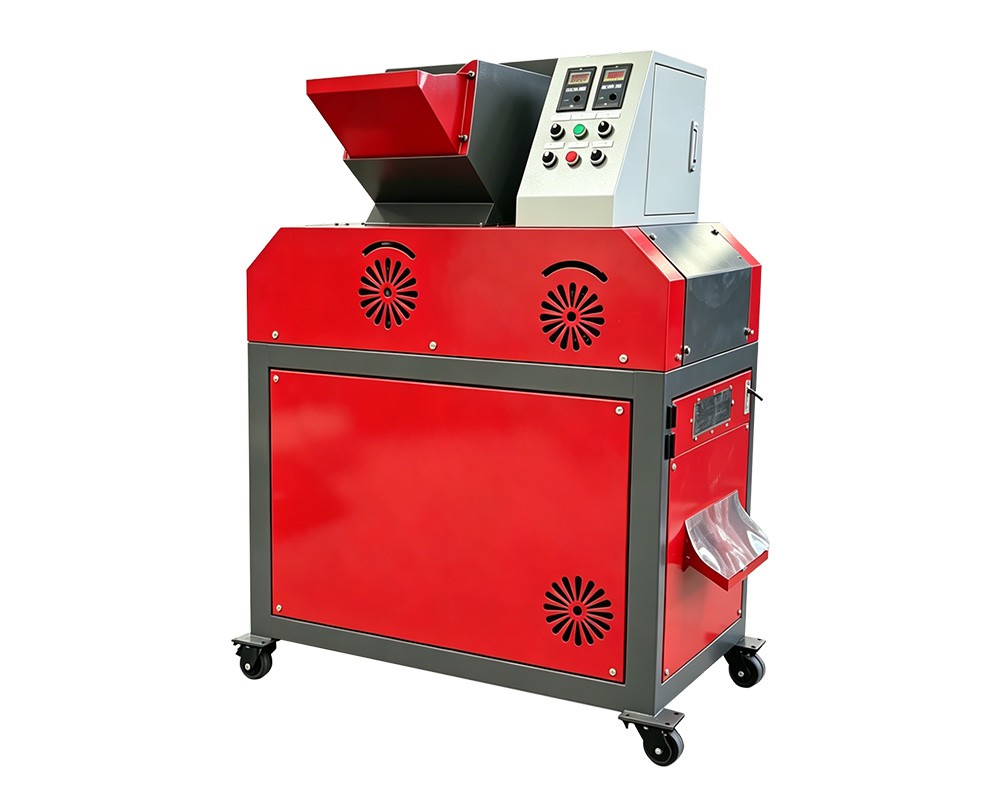
Mechanical granulation recovers both the copper and the plastic as products.
3. The commercial penalty that operators notice first
Burning does not just create regulatory risk. It destroys value in the product.
High-temperature oxidation forms a heavy oxide layer on the copper surface. That layer is not copper, it is contamination, and it changes how the material is graded. Scrap yards and smelters increasingly refuse burned copper outright, or accept it only at a discount, because they cannot verify its origin and because the oxide increases melt losses. The practical result is that burning — a process used to avoid the cost of mechanical separation — frequently produces a lower net realisation per tonne than selling the cable to a processor who granulates it properly.
There is also a hidden loss that rarely appears in the calculation: burning destroys the plastic. In a mechanical line, insulation becomes a second saleable product. In a burn, it becomes emissions and ash.
Burning versus mechanical granulation, compared
Measure | Open burning | Mechanical granulation |
|---|---|---|
Copper recovery | Incomplete; fines and oxidised metal are lost in ash and smoke | Typically 95–98% depending on line configuration |
Copper quality | Oxidised surface; downgraded or refused by many buyers | 98–99.5% copper content, clean surface, accepted at granule price |
Plastic fraction | Destroyed | Recovered and saleable as a secondary product |
Emissions | Dioxins, furans, HCl, CO, SO₂, heavy metals, particulates | Dust captured by cyclones and bag filters; no combustion emissions |
Legal position | Prohibited in most regulated markets; enforcement increasing | Permitted, with standard dust and noise controls |
Documentation | Cannot produce a defensible input/output record | Mass balance and output specification can be documented |
Labour | Low skill, high exposure | 1–2 operators for an automated line |
Operating cost | Low cash cost, high contingent liability | Electricity and blades; predictable and insurable |
Scalability | None — it is a manual practice | From 60 kg/h to 1,000 kg/h in standard models |
What the transition actually involves
The switch is not simply ‘buy a granulator’. In practice it has four components, and operators who skip the last two find that the machine underperforms.
- Material assessment. Establish what you actually have: cable diameters, copper content, insulation types, and the share that should be stripped rather than granulated. This determines the model and the separation configuration.
- Equipment and services. A dry granulation line with air separation and screening, plus dust capture and — if the feed includes fine or mixed material — electrostatic polishing. Check the power supply and floor loading before ordering.
- Permitting and documentation. Confirm how your local authority classifies the operation at the intended throughput, and set up the input/output records from day one. This is also what makes your output documentable to buyers.
- Operating discipline. Blade condition, screen integrity, feed rate and separation settings determine whether the line delivers its specification. A granulator run without that discipline will produce worse results than its datasheet, and the operator will conclude the machine was oversold.
Why burning persists, and what changes it
It persists where the copper value is high enough to justify the risk and enforcement is weak, and it is often a symptom of an informal supply chain rather than a deliberate choice by a legitimate business. Two things tend to change it: enforcement that imposes real cost, and buyers who refuse burned material. The second is arguably more powerful, because it removes the market rather than penalising the method.
For established recyclers the strategic point is different. As informal burning is squeezed out, the material that used to disappear into it has to go somewhere. Processors with legitimate, documented capacity are the natural destination — provided they can handle the mix, which increasingly includes fine and mixed wire that a basic line cannot process well.
A note on low-grade and contaminated material
One honest caveat: mechanical granulation is not a universal answer for every stream. Very low copper content material, heavily contaminated cable, and mixed cable with attached metal structures can be uneconomic to granulate because the preparation burden exceeds the recovered value. In those cases the correct answer is pre-processing — shredding and separating — rather than granulation, and sometimes the correct answer is that the material should go to a specialist processor rather than be handled in-house. Granulation is a better answer than burning, but it is not always the right answer for every tonne.
Frequently Asked Questions
Is burning copper wire illegal everywhere?
No, but it is prohibited in most regulated markets and enforcement is tightening. In the United States the Clean Air Act prohibits open burning of coated wire for metal recovery, and a large majority of states have specific bans. Penalties vary but can be substantial, and repeat offences in some jurisdictions carry custodial sentences. Anyone considering it should check local rules rather than assume.
Why is cable burning worse than burning other waste?
Because PVC insulation supplies carbon and chlorine, and copper is an effective catalyst for dioxin and furan formation in low-temperature, oxygen-poor combustion. The two materials that make cable valuable are the two that make an open burn efficient at generating persistent organic pollutants.
Does burning reduce the value of the copper?
Yes. High-temperature oxidation forms an oxide layer that is contamination, not copper. Many yards and smelters refuse burned copper or accept it only at a discount, because the material cannot be verified and the oxide increases melt losses. Mechanical granulation produces clean granules that trade at granule price.
How much does a granulation line cost to run compared with burning?
Burning has a low cash cost and a high contingent liability; granulation has a predictable operating cost dominated by electricity and blades. Published figures for cable granulation operating costs generally fall in the range of USD 8–15 per tonne for energy and consumables, before labour, with higher per-tonne figures for small machines. The comparison that matters is net realisation after penalties and downgrades, not cash cost.
Can a granulator handle the material that used to be burned?
Usually, but the mix matters. Fine and mixed wire, harness off-cuts and communication cable need appropriate preparation and, for good recovery, a fine-fraction polishing stage. Very low-grade or heavily contaminated material may need pre-shredding and separation first, and in some cases is better sent to a specialist processor than granulated in-house.
Plan Your Transition to Mechanical Recycling
If your operation is moving away from manual or thermal methods, tell us what material you have, what throughput you need and what your power supply allows. We will propose a dry granulation configuration and be straightforward about which fractions your material will and will not economically support.
Send us your material description, daily tonnage and target output, and our engineering team will respond with a model recommendation, a capacity calculation and a quotation. You are also welcome to book a live video walk-through of the Henan Jiacui Intelligent Equipment Co., Ltd. factory in Zhengzhou, Henan, China, or request a reference list of installations running comparable cable or waste streams.
About the Author and the Manufacturer
This article was prepared by the technical sales and engineering team of Henan Jiacui Intelligent Equipment Co., Ltd. (brand name JIACUI). Founded in 2015 in Zhengzhou, Henan Province, China, JIACUI designs and manufactures solid waste recycling equipment and copper wire granulation systems in a 5,000 m² factory with more than 100 employees. Our equipment holds CE, ISO and CSA certification, uses ABB and Siemens control components built to European design standards, and has been delivered to more than 400 customers in over 100 countries. Factory audits have been completed with SGS, BV and TÜV. We hold 27 patents covering shredding, granulation and separation technology. Where this article quotes performance figures, those figures come from our published model specifications and from commissioning tests on real installations; actual results depend on cable composition, feed preparation and operating practice.
Previous: The Rise of Automated Scrap Cable Sorting: Technology Innovations to Watch
Next: None