
Total Cost of Ownership for a Double-Shaft Shredder: Purchase Price, Blades, Power and Downtime
Total Cost of Ownership for a Double-Shaft Shredder: Purchase Price, Blades, Power and Downtime
Published in News & Insights · Buying & Selection Guides
By Henan Jiacui Intelligent Equipment Co., Ltd.
When a recycler compares two double-shaft shredders, the conversation almost always starts — and too often ends — with the purchase price. That single number is the least useful figure on the quotation. A shredder is a twenty-year asset whose real cost is dominated by what happens after it is commissioned: the blades you consume, the electricity it draws, the hours it stands still, and the labour it takes to keep it running. Two machines quoted 20% apart can invert completely once you model five years of ownership.
This guide gives you a repeatable framework for comparing shredders on total cost of ownership (TCO). Every worked figure uses real Jiacui model parameters, so you can see how chamber size, motor power, blade count and blade geometry translate into money.
Why purchase price is a poor buying signal
The purchase price is set by the market, not by the design. A machine can be cheap because it is built light — thinner shafts, smaller bearings, fewer or thinner blades, a gearbox selected for the brochure rather than the duty cycle. Those savings are financed by the buyer over the life of the machine in three ways:
- Higher blade consumption. Softer blade steel and thinner section wear faster, so you re-sharpen and re-order more often.
- Higher energy cost per tonne. An undersized motor stalls and trips; an oversized one wastes power on light feed. Neither is efficient at your actual material.
- Higher downtime. The single most expensive line item in any shredding operation is a stopped line. Small bearings, weak shafts and inaccessible service points convert routine maintenance into unplanned shutdowns.
A TCO model forces those three costs onto the same page as the quotation. The rest of this article builds that model line by line.
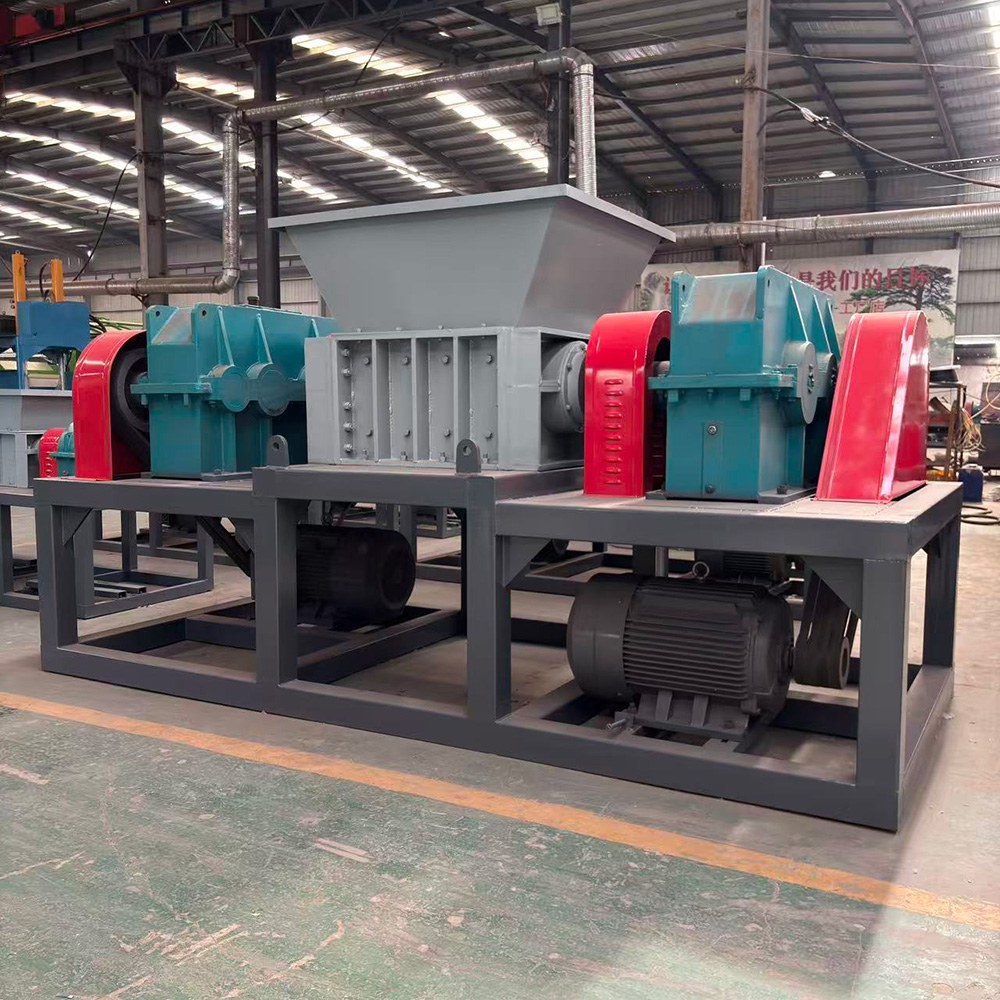
An 800 × 800 mm double-shaft shredder with 400 mm diameter blades — the class where throughput justifies a full TCO calculation rather than a price comparison.
Step 1 — Fix your duty cycle before you compare anything
TCO is meaningless without a duty cycle. Before requesting quotes, commit to five numbers:
- Tonnes per hour of actual feed — not nameplate capacity, but the throughput you will realistically sustain on your material.
- Hours per day and days per year the machine will run. A one-shift operation and a three-shift operation have completely different economics.
- Largest single item the machine must swallow without pre-cutting. This drives chamber size and blade diameter.
- Contamination profile — tramp metal, grit, concrete, textile. This drives blade thickness and steel grade.
- Required output size downstream. This decides whether you need one shredder or a shredder plus a secondary granulator.
Write these down and hold them constant across every quote. A supplier who cannot answer specific questions about your duty cycle is quoting a brochure, not a solution.
Step 2 — Model blade consumption, the largest variable cost
Blades are the consumable that separates a cheap machine from an expensive one. Consumption is a function of blade steel, blade thickness and blade count per rotor. Jiacui shredders use 55SiCr spring steel as the standard blade material; the largest 1200 and 1500 models move to alloy steel and M6V tool steel respectively because the cut load per blade is far higher.
The table below shows how blade geometry scales across the Jiacui double-shaft range. Note carefully how the blade section grows with chamber size — this is what keeps consumption per tonne roughly flat as machines get larger, instead of rising with throughput.
Model (chamber mm) | Motor | Blades per rotor | Blade Ø × thickness (mm) | Shaft Ø (mm) | Bearing | Weight |
|---|---|---|---|---|---|---|
400 × 430 | 7.5 kW × 2 | 19 | 216 × 19 | Φ107 | 22219 | 1.2 t |
600 × 430 | 15 kW × 2 | 29 | 216 × 20 | Φ107 | 22219 | 1.5 t |
800 × 630 | 22 kW × 2 | 26 | 316 × 30 | Φ155 | 22222 | 3.8 t |
800 × 800 | 30 kW × 2 | 20 | 400 × 40 | Φ180 | 22232 | 5.7 t |
1000 × 630 | 30 kW × 2 | 33 | 316 × 30 | Φ155 | 22222 | — |
1000 × 800 | 37 kW × 2 | 20 | 400 × 50 | Φ180 | 22232 | 6.5 t |
1200 × 800 | 45 kW × 2 | 24 | 400 × 50 | Φ180 | 22232 | 7.5 t |
1500 × 1050 | 75 kW × 2 | 30 | 550 × 50 | Φ245 | 22240 | 15 t |
To turn geometry into money, multiply the blade count by your expected blade life in tonnes. In practice a 400 mm × 50 mm blade tipped with the correct steel on clean feed can process material in the low tens of thousands of tonnes before it must be re-profiled; the same blade fed mixed construction waste with embedded grit may need attention after a fraction of that. The lesson is not the exact multiplier — it is that the contamination profile, not the machine, sets the blade budget. Ask every supplier for a blade consumption estimate for your material, and hold them to it in writing.
Step 3 — Calculate energy cost per tonne, not per hour
Motor power is the headline number buyers over-weight. The number that matters is kilowatt-hours per tonne of output. A 22 kW × 2 machine that runs steadily at 70% load can be substantially more efficient per tonne than a 45 kW × 2 machine idling at 25% load because it is oversized for the feed. Jiacui matches drive power to chamber volume so the machine sits in its efficient band on the material it was sized for.
The arithmetic is simple. Take the installed motor power, multiply by your realistic average load factor, multiply by the hours the machine runs, and divide by the tonnes actually produced. Then apply your local industrial tariff. A machine that costs 5,000 more at purchase but saves 3 kWh per tonne will repay that difference long before the blades do.
- 400 / 600 model class: 7.5–15 kW per shaft, suited to light and medium feed on one to two shifts.
- 800 / 1000 model class: 22–37 kW per shaft, the volume workhorses for MSW, cable and e-waste pre-shredding.
- 1200 / 1500 model class: 45–75 kW per shaft, for high-throughput single-pass duty and the toughest feed.
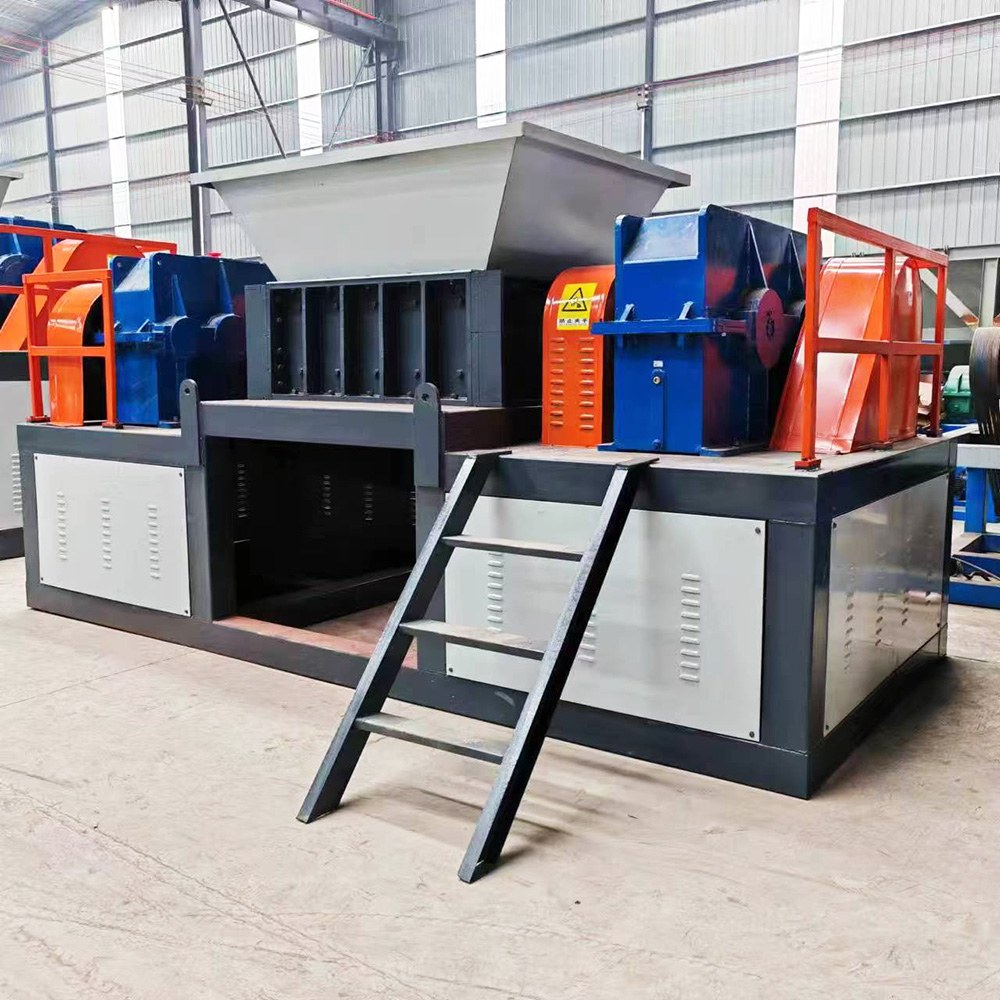
The 1200 × 800 mm model with 45 kW × 2 drive and 50 mm blades — engineered for recyclers who run two or three shifts and need throughput without a second stage.
Step 4 — Price the downtime, then design it out
Downtime is the cost buyers forget to model and the cost suppliers are least eager to discuss. Put a number on it: your line's gross margin per hour multiplied by the hours per year you expect to lose. Even a single unplanned failure a month, at six hours to diagnose and repair, adds up quickly at any commercial throughput.
Downtime is reduced by design choices that are easy to check on a quotation and hard to add later:
- Bearing size and shaft diameter. Generous shafts (Φ107 up to Φ245) and large spherical roller bearings (22219 through 22240) tolerate shock loads that destroy undersized assemblies.
- Service access. Can a fitter reach the blade bolts, gearbox and bearings without removing the rotor? Accessible designs turn two-day repairs into two-hour jobs.
- Standard components. Bearings, seals and fasteners in common sizes can be sourced locally almost anywhere in the world; bespoke parts mean a container shipment every failure.
- Electrical protection and European-standard control. ABB and Siemens control components with proper overload, phase-failure and thermal protection stop small faults from becoming burnt motors.
Step 5 — Put it together: a five-year TCO template
Lay the five line items side by side for each candidate machine. The figure that matters is not any single line, but the total per tonne produced.
Cost line | How to estimate | Why it changes between suppliers |
|---|---|---|
Purchase & freight | Quotation + shipping + duty + installation | Build weight, chamber size, drive configuration |
Blade & wear parts | Blade count × replacement rate × unit price | Blade steel grade, thickness, count |
Energy | Installed kW × load factor × hours ÷ tonnes × tariff | Motor matching to feed, transmission efficiency |
Downtime | Line margin/hour × lost hours/year | Bearing size, shaft stiffness, service access, control quality |
Maintenance labour | Scheduled hours/year × labour rate | Lubrication design, accessibility, part commonality |
Resale / residual | Estimate residual value at year five | Build quality, brand reputation, part availability |
Sum years one to five for each machine and divide by the total tonnes the machine will have processed. That single figure — cost per tonne processed — is the only honest basis for choosing between two shredders. It routinely reorders quotations that looked obvious on price alone.
Red flags in a shredder quotation
- No blade consumption estimate for your specific material.
- Motor power quoted without chamber size, blade diameter or blade thickness.
- No bearing designation or shaft diameter given — only the model name.
- A gearbox described only by ratio, with no brand or torque rating.
- No mention of control-standard components or electrical protection.
- No spare-parts list and no lead time commitment for wear parts.
Any supplier who will happily answer these questions on a call is a supplier worth shortlisting. The ones who deflect are telling you where their cost was cut.
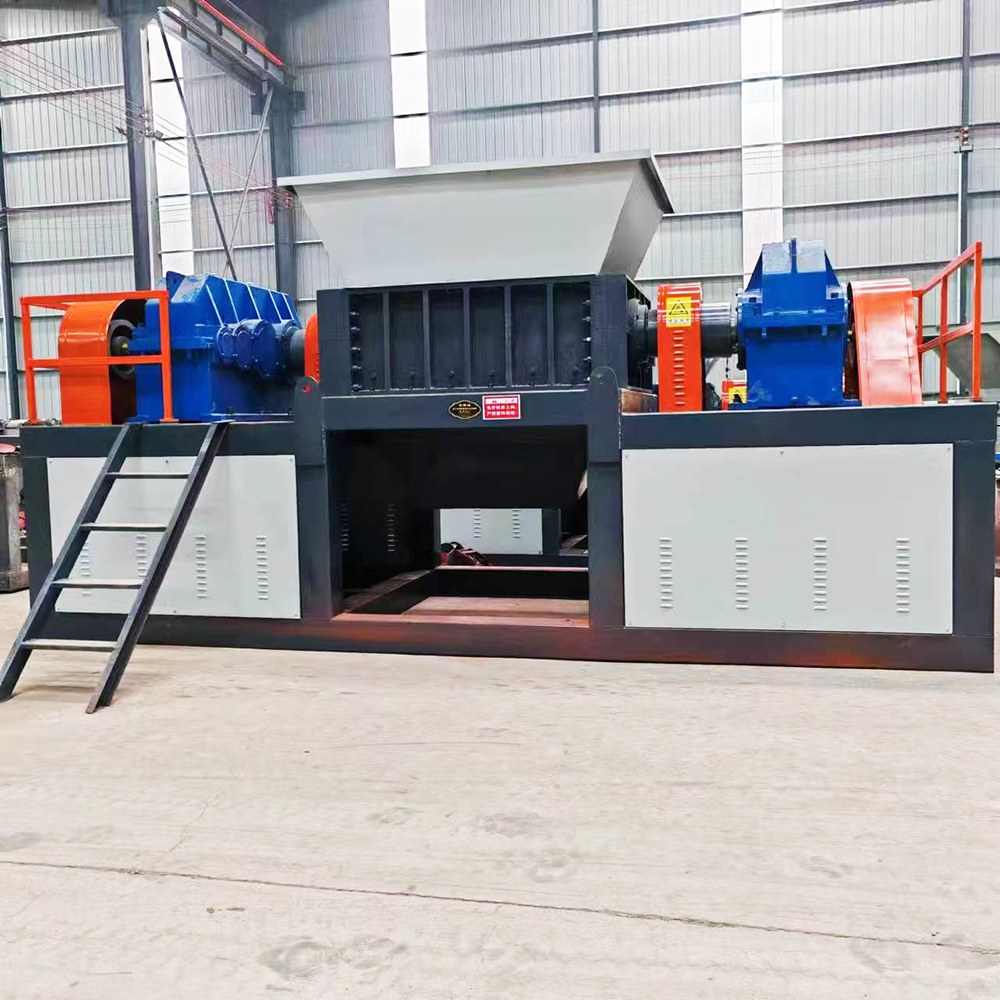
The 1500 × 1050 mm model with 75 kW × 2 drive, Φ245 shafts and 22240 bearings — the top of the double-shaft range, where build quality and part availability decide TCO.
Frequently Asked Questions
Is a cheaper shredder ever the right choice?
Yes — when throughput is low, the duty cycle is light and the material is clean. For an occasional single-shift operation on soft, uncontaminated feed, a lighter machine sized correctly can deliver a lower cost per tonne than a heavy one that never reaches its load. The framework does not say 'always buy the biggest'; it says buy the machine whose TCO is lowest at your real duty cycle.
How many blades should I expect to replace per year?
It depends almost entirely on contamination. Compute it from blade count and expected tonnage between sharpenings rather than from a rule of thumb, and require your supplier to commit to a consumption estimate for your material and a lead time for replacement blades.
Does higher motor power always mean higher throughput?
No. Throughput is set by chamber size, blade geometry, rotor speed and feed presentation. Power determines how much torque is available to keep the rotor turning under load. An over-powered machine with a small chamber and light blades will not outperform a balanced machine, and it will cost more to run.
Why does blade thickness matter so much to cost?
Thicker blades resist shock loading and contaminant strikes, so they survive the material that destroys thinner blades. They cut coarser and draw more power. The economics follow from your contamination profile: clean feed rewards thinner, finer blades; contaminated feed rewards thicker, tougher ones because avoiding blade damage avoids the real cost — downtime.
Get a Selection Review
Send Jiacui your duty cycle — tonnage, hours, largest item, contamination and target output size — and we will build a five-year TCO comparison across the models that fit your operation, including a blade consumption estimate for your material.
Contact us for a specification review, a factory audit video call or a reference list of installations running comparable material.