
Double-Shaft Shredder Blade Maintenance: Inspection Intervals, Sharpening Standards and Replacement Criteria
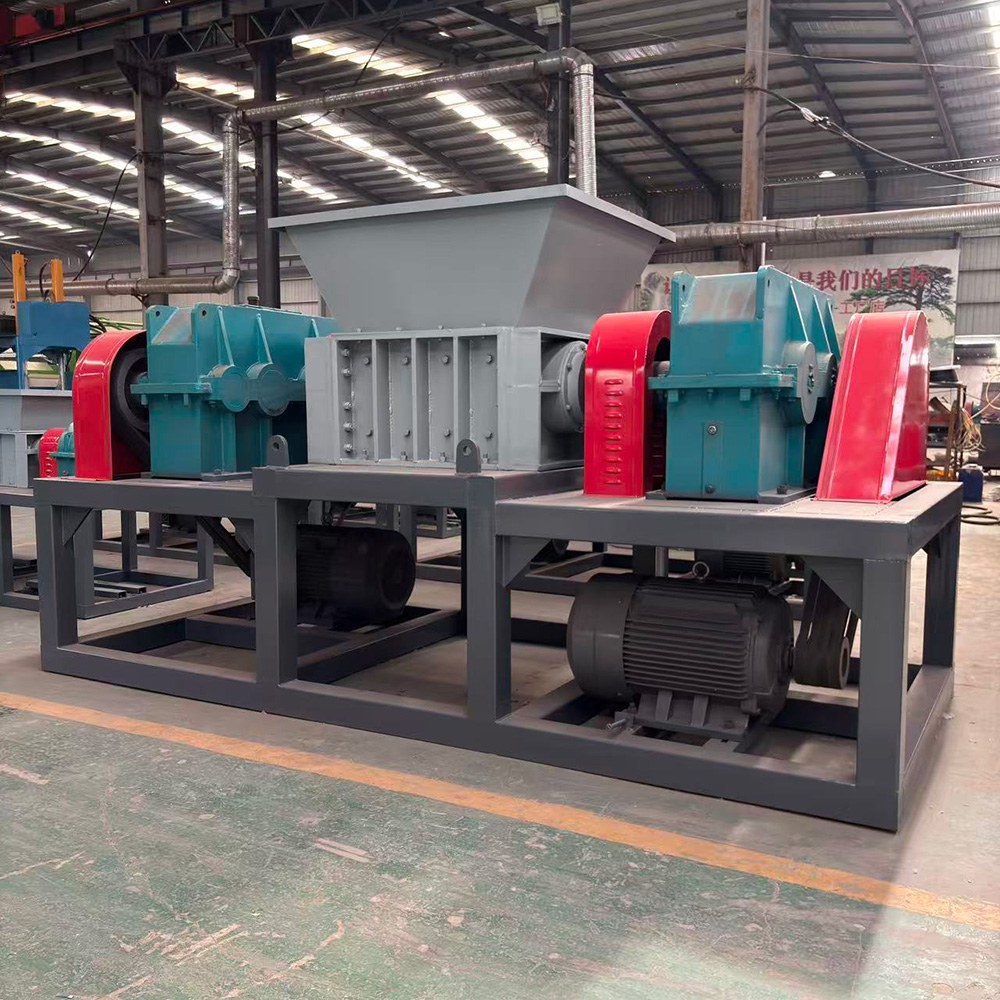
Double-Shaft Shredder Blade Maintenance: Inspection Intervals, Sharpening Standards and Replacement Criteria
Published in News & Insights · Tech & Maintenance
By Henan Jiacui Intelligent Equipment Co., Ltd.
Blades are the consumable that defines a shredder's economics. They set throughput, they set particle size consistency, and they set how hard the drive train works. A sharp, correctly gapped blade stack cuts with modest power draw; a dull one crushes, draws more current, produces fines that separate badly downstream, and transfers load into the shafts, bearings and gearbox.
This article sets out the maintenance standards we recommend for our double-shaft range, alongside the material-specific guidance that applies generally in the industry. Where a figure depends on what you are actually shredding, we say so.
Start With the Material, Not the Calendar
Any maintenance interval quoted without reference to feed material is close to meaningless. The variable that drives blade wear is abrasiveness and contamination, not running hours as such. Industry guidance illustrates the spread clearly:
- Clean plastics: blades may run 1,000–2,000 hours before sharpening is needed.
- Abrasive or contaminated material — glass-filled polymer, construction debris, municipal waste with grit — may need attention every 500 hours.
- Heavy or metal-bearing feed: inspection intervals shorten further, and blade damage rather than gradual wear becomes the limiting factor.
Treat published intervals as a starting calibration. Run to them once, record what you actually find, then adjust to your own material and duty cycle.
Inspection Intervals We Recommend
Activity | Interval | What you are looking for |
|---|---|---|
Visual blade inspection | Every 40–60 operating hours | Chipping, cracking, uneven wear, deformation |
Detailed blade assessment | Every 200–300 operating hours | Edge wear measurement, wear pattern, hook profile |
Blade bolt torque check | Weekly, and before every startup | Loosened fasteners, missing lock washers |
Blade gap measurement | Every 200–300 hours, and after any blade work | Gap drifting outside 0.3–0.8 mm |
Sharpening | As indicated by wear | Edge wear beyond roughly 0.5 mm, or local chipping |
Full blade set replacement | Every 300–500 hours on abrasive duty; longer on clean feed | Profile loss beyond recoverable limits |
A written blade log is worth keeping. Record hours, date, what was found, what was done and which position on the shaft. Over a few cycles it reveals wear patterns that a single inspection never will — and abnormal, localised wear is almost always a symptom of a feeding or contamination problem rather than a blade problem.
Sharpening: Angles, Depth and Temperature
Sharpening restores the edge; done badly it destroys the heat treatment that makes the blade worth having. Three parameters matter:
Parameter | Standard |
|---|---|
Primary edge angle | 30° ± 2°, maintained as originally designed |
Secondary edge angle | 45° ± 2° |
Maximum single grinding depth | 1.5 mm (measured from edge to blade back) |
Maximum temperature during grinding | Below 200 °C |
Post-sharpening treatment | Polish edge to a 0.05–0.1 mm radius to remove burrs |
Temperature is the one that gets ignored, and it is the most damaging. Dry grinding can push the edge past 250 °C. At that point the steel tempers back: hardness can fall below 40 HRC and service life drop by more than 70%. The blade looks sharp and fails in a fraction of the expected time. Use water cooling or a CBN grinding wheel, and keep temperature under control throughout.
Our blades are supplied in 55SiCr — a silicon-chromium spring steel to GB/T 1222, broadly equivalent to JIS SUP12 and EN 54SiCr6 — heat treated to roughly 52–54 HRC. That hardness is a deliberate compromise. Harder steel holds an edge longer in clean cutting but chips when it meets hidden metal or mineral contamination; softer steel deforms. 52–54 HRC keeps enough toughness to survive the contaminated feed that real-world shredding always involves.
Expect roughly 4–5 regrinds from a blade in this class before the profile is spent. Beyond that the hook geometry loses its bite and throughput falls even with a sharp edge — at which point replacement becomes cheaper than repeated sharpening.
When a Blade Must Be Scrapped
These are the accepted discard criteria. Any one of them means the blade should not go back on the shaft:
- Thickness loss exceeding 15% of original dimension.
- Penetrating cracks of any length.
- Chipping depth greater than 5 mm.
- Hook profile worn beyond the point where the original cutting geometry can be restored.
Blade Gap: The Adjustment That Gets Skipped
Blade clearance is the most commonly neglected setting on a double-shaft shredder, and one of the most consequential. The accepted standard is 0.3–0.8 mm, measured with a feeler gauge.
- Gap below 0.2 mm: blades strike each other. This produces the characteristic small, repeated chipping along the edge — often misdiagnosed as a metallurgy problem.
- Gap above 1.0 mm: material passes uncut, throughput collapses, and the machine recirculates rather than shears.
A widening gap that you did not set is a diagnostic signal, not a nuisance. The usual causes are worn shaft bearings allowing the shafts to separate, or a worn blade seat / missing sealing gasket. Check bearing clearance before assuming the blades are at fault.
After any blade work, tighten mounting bolts to specification — typically 200–280 N·m — using a torque wrench, replace deformed bolts rather than reusing them, and apply anti-seize compound to contact surfaces. Then run the machine unloaded for two minutes listening for abnormal noise, followed by five minutes at low speed with material.
Diagnosing Blade Faults
Symptom | Likely cause | Corrective action |
|---|---|---|
Frequent small chipping along the edge | Hard metal in feed; or gap below 0.2 mm | Add magnetic separation / metal detection; reset gap to 0.3–0.8 mm |
Blade breakage or penetrating cracks | Forging defect, inadequate tempering, or sustained overload | Request metallurgical certification on replacements; reduce feed size; consider pre-shredding |
Throughput falling, current rising | Dull blades smearing rather than cutting; or chamber overheating | Sharpen or replace; check feed rate and cooling |
Gap drifting wider over time | Bearing wear, or worn blade seat | Measure bearing clearance; replace bearings; check seats and gaskets |
Spare Parts to Hold
Item | Suggested stock | Replacement frequency |
|---|---|---|
Full blade set | 1–2 sets | Every 3–6 months, usage dependent |
Bearings | 2–4 units | Annual preventive replacement |
Oil seals and gaskets | Basic stock | As needed, at each blade change |
Blade bolts and lock washers | Full set | Renew at each blade change |
Holding one spare blade set is the single highest-value item on that list. Blade work is the most frequent maintenance event, and waiting for a shipment is the most common cause of extended downtime.
Safety
Blade work is the most hazardous maintenance task on the machine. Before opening the chamber: isolate and lock out the power supply (lockout/tagout), release and lock any hydraulic system, and post warning signs at the site. Wear cut-resistant gloves, eye protection and appropriate clothing. When freeing a stuck blade, tap it with a copper or soft-metal rod — never a steel hammer, which can fracture hardened tool steel.
Frequently Asked Questions
How often should I actually sharpen?
Follow the material: clean plastics commonly run 1,000–2,000 hours between sharpening, while abrasive or grit-contaminated material may need attention at around 500 hours. Inspect every 40–60 hours and sharpen when edge wear exceeds roughly 0.5 mm or you see local chipping. Let condition, not the calendar, make the decision.
Can I dry-grind the blades?
We advise against it. Dry grinding readily exceeds 250 °C at the edge, which tempers the steel back below 40 HRC and can cut service life by more than 70%. Use water cooling or a CBN wheel and stay below 200 °C.
Why do my blades chip even though the steel is hard?
Most often it is blade gap. Below about 0.2 mm the blades strike each other and chip repeatedly along the edge. Reset the gap to 0.3–0.8 mm. If the gap is correct, look for hard metal contamination in the feed and add magnetic separation.
Should I replace blades individually or as a set?
As a set. Mixing worn and new blades on the same shaft unbalances cutting load and produces uneven wear, which then shortens the life of the new blades as well. Replace the set and re-establish gap in one operation.
Need Blades or Technical Support?
Jiacui supplies replacement blade sets for the full double-shaft range — model 400 through model 1500 — in the correct material and hardness for each application, along with spacers, bolts, bearings and seals. Contact us with your model and serial number and we will quote the correct set.