
Dry Type vs. Wet Type Copper Wire Granulator: Which One is Best for Your Yard?
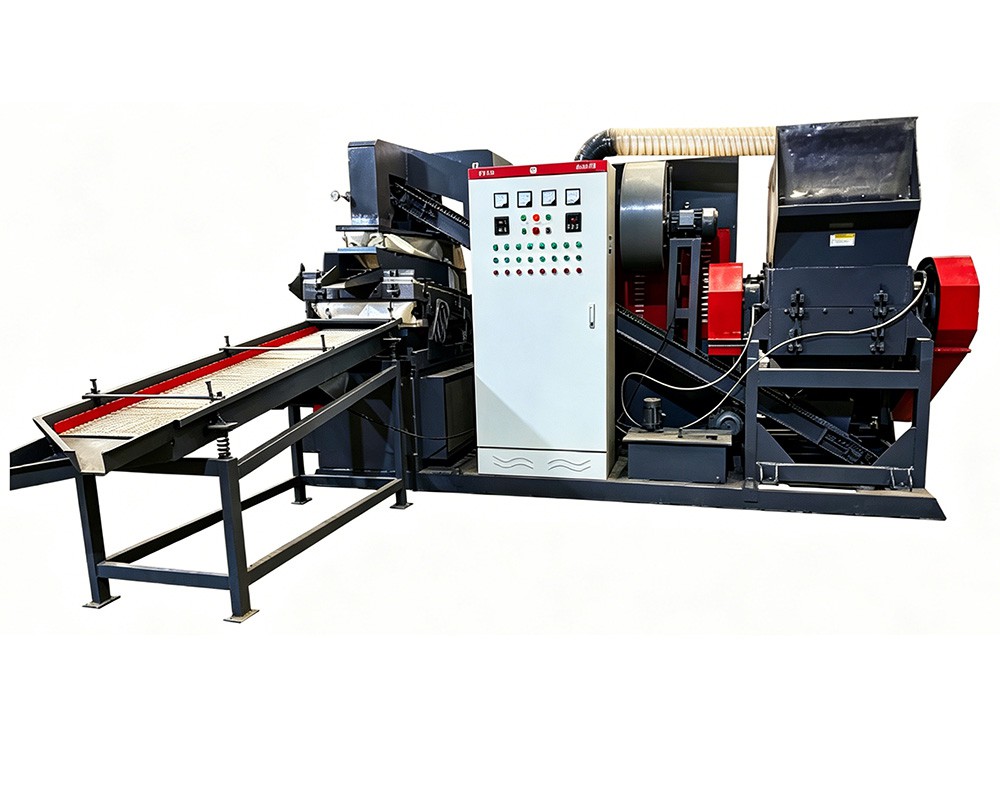
Dry Type vs. Wet Type Copper Wire Granulator: Which One is Best for Your Yard?
Published in News & Insights · Buying & Selection Guides
By Henan Jiacui Intelligent Equipment Co., Ltd.
Almost every buyer of cable recycling equipment eventually asks the same question: dry separation or wet separation? It is a fair question, because the two approaches solve the same problem — separating copper from plastic — in fundamentally different ways, and the choice affects not just purity but your water bill, your permits, your maintenance regime and your operating cost for the whole life of the machine.
This comparison is written by a manufacturer of dry-type systems, which is a commercial interest we will state plainly. We have therefore been deliberately specific about the cases where wet separation is still the better answer, so that you can use this article to make a decision rather than to reassure yourself about one already made.
How dry separation works
In a dry line the cable is shredded and granulated into small pieces, then separated using air and gravity. Because copper is roughly eight times denser than PVC or PE insulation, a controlled airstream can lift the plastic fraction away while the copper falls. A vibrating screen then classifies the copper product by size and recovers fines. No water is used at any stage, and there is no liquid effluent.
- Feeding — cable enters by belt or hopper.
- Pre-shredding — optional, for long or bulky cable and for fine wire.
- Granulation — blades liberate copper from insulation.
- Air gravity separation — variable-speed fan lifts plastic, drops copper.
- Screening — vibrating screen sizes and classifies the product.
- Dust collection — closed system captures fines and keeps the plant clean.
How wet separation works
Wet separation uses water as the separation medium. Granulated material is introduced into a water bath or a water-based density separator; copper sinks and plastic floats, and each is removed separately. The water is typically recirculated through a settling tank or filter system, with some make-up water and some discharge or evaporative loss.
Head-to-head comparison
Criterion | Dry type | Wet type |
|---|---|---|
Separation medium | Air and gravity | Water (with density separation) |
Water consumption | None | Continuous make-up; recirculation reduces but does not eliminate it |
Wastewater and sludge | None | Inevitable; requires settling, filtration, and usually a discharge permit or a zero-discharge design |
Typical copper content achieved | 98–99.5% on well-prepared feed with variable-speed separation | Comparable, and historically easier to achieve on very difficult mixed or coated material |
Corrosion and wear | Low — no moisture in contact with structure | Higher; wet abrasive slurry accelerates wear on pumps, screens and structural steel |
Footprint and civil works | Concrete pad and canopy; relatively simple | Baths, tanks, pumps, settling ponds or filter plant; significant civil works |
Power consumption | Lower — no pumps or water circulation | Higher — pumps, agitators and treatment equipment run continuously |
Operating cost profile | Power, blades, screens, dust disposal | Power, blades, water, chemicals or flocculants, sludge disposal |
Permitting complexity | Metal waste processing registration; dust and noise provisions | Additional water abstraction and wastewater discharge consents |
Plant hygiene | Dust control required | Wet and muddy by nature; sludge handling is a permanent task |
Cold-climate operation | Straightforward | Water systems must be protected from freezing or drained |
Where dry separation clearly wins
- Ordinary mixed cable recycling. Household wire, communication cable, light power cable and automotive harness: dry separation reaches premium purity grades with none of the wet process overhead.
- Anywhere water is scarce, expensive, or both. In many of the markets we serve, the cost and scarcity of process water alone rules out a wet line before purity is even discussed.
- Where discharge permits are difficult or slow. A dry line has no liquid effluent to permit. This is often the difference between commissioning in months and waiting years.
- Cold climates. A dry plant does not freeze, does not need draining for winter, and does not lose production days to ice.
- Multi-product yards. Because separation velocity is adjustable, one dry line can process everything from 0.2 mm capillary wire to 100 mm power cable — which is exactly what a general scrap yard needs.
Where wet separation can still make sense
Wet separation is not obsolete, and it still has genuine applications. Historically it was the standard method for difficult material, and it retains some advantages that are worth stating honestly.
If your feed is dominated by very heavily coated, lacquered, tinned or mixed-alloy conductor that resists clean dry liberation, a wet density separator may achieve a slightly cleaner first-pass separation. Where a site already has an existing wet process, a water treatment plant and the permits in place, converting to dry rarely pays for itself on purity alone. And if you are processing material that benefits from washing — soil-contaminated cable from demolition, for example — the water bath doubles as a cleaning stage.
Situation | Which system to prefer |
|---|---|
General mixed cable, household wire, harness | Dry type — no contest |
Very high proportion of tinned or lacquered fine strand | Dry type first, with multi-stage separation; test before assuming wet is required |
Existing facility with water treatment and permits already in place | Wet can remain viable; replace only when it reaches end of life |
Heavily soil-contaminated demolition cable needing washing | Wet type has a genuine second benefit — but consider a separate washing step instead |
No reliable process water, or strict discharge rules | Dry type only |
Cold climate or intermittent operation | Dry type — a wet line is a liability when it is not running continuously |
The costs of wet processing that buyers forget
- Water treatment plant. Settling ponds, filtration or a treatment unit are not optional extras; they are part of the machine, and they must be maintained.
- Sludge disposal. The very fine copper and plastic sludge that accumulates must be handled as a waste stream, with all the paperwork that implies.
- Corrosion. Wet, abrasive slurry shortens the life of pumps, screens and structural steel. Spare-part consumption is materially higher.
- Continuous pumping energy. Water circulation and agitation run whenever the plant runs, partly offsetting the lower fan power of a dry line.
- Failure modes. A dry granulator that jams is cleared and restarted. A wet line that loses circulation, blocks a nozzle or floods a settling tank can stop production for a day.
Purity, throughput and recovery compared honestly
On ordinary mixed cable, a well-configured dry line with variable-speed air separation reaches the same 98–99.5% copper content that a wet line achieves, at similar recovery, with lower operating cost and no effluent. On unusually difficult material, a wet bath can hold purity marginally more easily on a single pass — but the gap narrows to near zero once a dry line is fitted with a second separation pass, which is why we offer multi-stage dry separation rather than treating the wet process as the only answer for hard material.
What we recommend, and the honest caveat
For the overwhelming majority of yards — general mixed cable, household and communication wire, power cable, automotive harness, and cable manufacturers' off-cuts — we recommend dry-type separation. It reaches equivalent purity, avoids a permanent water and sludge burden, is simpler to permit, easier to maintain and better suited to intermittent or cold-climate operation.
The caveat is that this is our product line. If your feed is a genuinely difficult, heavily coated stream and you already have water treatment infrastructure in place, wet separation may still be the right answer for you, and we would rather tell you that than sell you the wrong machine. The test that settles it is straightforward: send a representative sample and have both configurations assessed against your actual material and your actual cost of water and waste handling.
A decision checklist
- What is my process water cost per cubic metre, and is supply reliable year-round?
- Do I have, or can I obtain, a wastewater discharge permit — and how long will it take?
- How cold does my site get, and will the plant run continuously or intermittently?
- What proportion of my feed is thin, coated or otherwise difficult cable?
- What copper content does my buyer actually require, and is 98–99% sufficient?
- Have I costed sludge disposal and increased spare-part consumption for the wet option?
- Have I tested my own material rather than a supplier's favourable sample?
Frequently Asked Questions
Is dry separation as good as wet separation for copper purity?
On ordinary mixed cable, yes — 98–99.5% copper content is achievable with dry separation using variable-speed air separation and a second separation pass, which matches what a wet bath achieves. On unusually difficult heavily coated material, a wet bath can hold purity marginally more easily in a single pass, but the difference narrows substantially with a multi-stage dry configuration.
Does a wet granulator cost more to run?
Generally yes. A wet line adds water consumption, pump and agitator energy, water treatment maintenance, sludge disposal, and faster wear on wetted components. The purchase price difference is often modest compared with the lifetime operating difference.
Do I need a permit for a wet separation plant?
In most jurisdictions you will need consents covering both water abstraction and wastewater discharge, in addition to the waste-processing registration required for any cable recycling operation. The time and uncertainty involved in obtaining those consents is a significant, and often underestimated, part of the project.
Can a dry line really handle capillary and fine wire?
Yes, provided it is configured for it: pre-shredding to control strand length, a suitable screen aperture, and variable-speed air separation set to a lower velocity. Without those adjustments a dry line will lose fine copper to the plastic outlet — but that is a configuration problem, not a fundamental limitation of dry separation.
Which type should a small yard choose?
For a small or medium yard, dry type. The capital is lower, there is no water or effluent infrastructure to build and maintain, power consumption is lower, and a single machine can be retuned to handle whatever mix of cable arrives. Wet separation only begins to compete once a site already has water treatment and permits in place.
Ask Us to Compare Dry and Wet for Your Material
The only test that settles dry versus wet is your own material. Send us a representative sample with your expected monthly tonnage, and we will give you a straight assessment — including telling you if a wet process is the better fit for your stream, even though we do not build one.
Send us your material description, daily tonnage and target output, and our engineering team will respond with a model recommendation, a capacity calculation and a quotation. You are also welcome to book a live video walk-through of the Henan Jiacui Intelligent Equipment Co., Ltd. factory in Zhengzhou, Henan, China, or request a reference list of installations running comparable cable or waste streams.
About the Author and the Manufacturer
This article was prepared by the technical sales and engineering team of Henan Jiacui Intelligent Equipment Co., Ltd. (brand name JIACUI). Founded in 2015 in Zhengzhou, Henan Province, China, JIACUI designs and manufactures solid waste recycling equipment and copper wire granulation systems in a 5,000 m² factory with more than 100 employees. Our equipment holds CE, ISO and CSA certification, uses ABB and Siemens control components built to European design standards, and has been delivered to more than 400 customers in over 100 countries. Factory audits have been completed with SGS, BV and TÜV. We hold 27 patents covering shredding, granulation and separation technology. Where this article quotes performance figures, those figures come from our published model specifications and from commissioning tests on real installations; actual results depend on cable composition, feed preparation and operating practice.
Previous: How to Choose the Right Copper Wire Granulator Machine: Capacity & Budget Guide
Next: None