
Essential Maintenance Tips to Extend the Lifespan of Copper Wire Granulator Blades
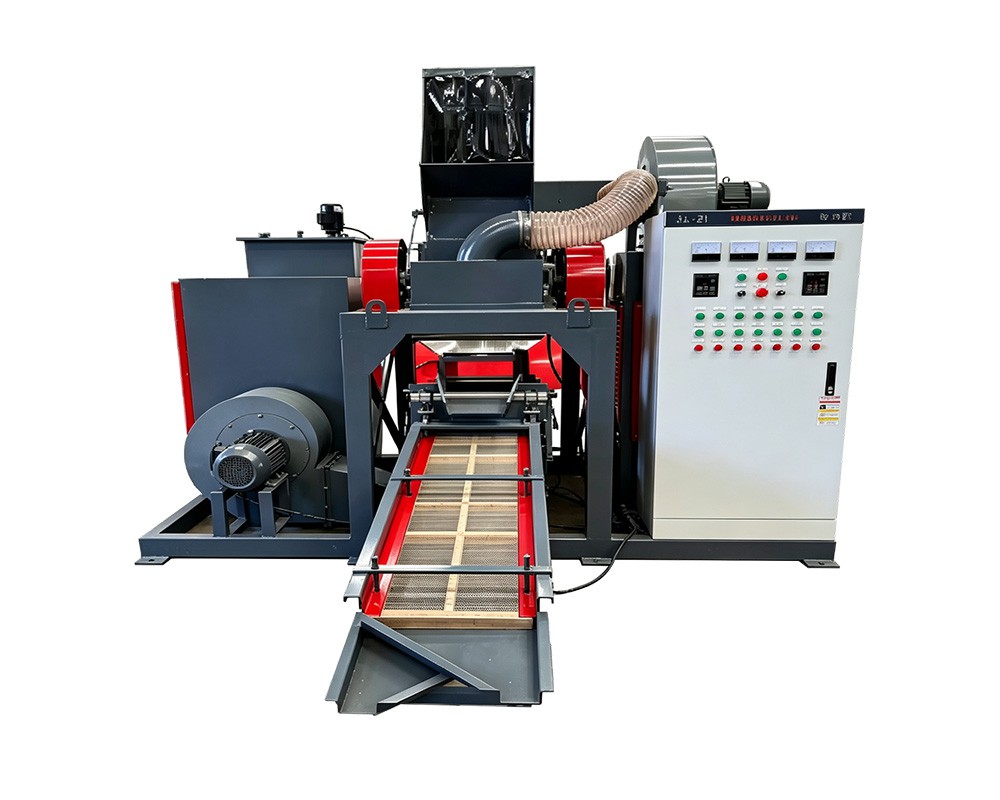
Essential Maintenance Tips to Extend the Lifespan of Copper Wire Granulator Blades
Published in News & Insights · Tech & Maintenance
By Henan Jiacui Intelligent Equipment Co., Ltd.
Blades are the part of a copper wire granulator that converts electricity into profit, and they are also the part most often abused. In practice the difference between a blade set that lasts two months and one that lasts six is rarely the steel. It is almost always feeding discipline, gap maintenance and the willingness to sharpen at the right moment instead of the convenient one.
This article sets out what actually wears a granulator blade, and then a maintenance routine — daily, weekly and periodic — that is short enough to be followed on a busy yard and specific enough to make a measurable difference to blade cost per tonne.
What actually wears a granulator blade
Wear mechanism | What causes it | How it shows up | How to reduce it |
|---|---|---|---|
Abrasive wear | Soil, sand, concrete dust and grit arriving on cable from demolition sites | Gradual loss of edge sharpness across the whole cutting edge | Pre-sort and, where contamination is heavy, wash or screen feed before granulation |
Impact and chipping | Steel clips, connectors, armouring, bolts, hard foreign objects | Localised nicks and chips on individual cutting edges | Magnetic separation at reception; inspect feed for embedded metal |
Thermal softening | Running with a blunt edge, which generates heat instead of cutting | Edge deformation and smearing rather than cracking; copper smeared into plastic | Sharpen on schedule; do not keep running a dull blade 'for one more shift' |
Fatigue cracking | Repeated shock loading from over-sized or hard feed | Cracks propagating from the blade root or bolt holes | Control maximum feed size; reject material the machine is not rated for |
Corrosion (idle) | Moisture and acidic residues during long idle periods | Surface pitting that unbalances the rotor on restart | Clean down and protect blades during extended shutdowns |
Only one of those five — abrasive wear — is genuinely a function of your material. The other four are functions of how you operate and maintain the machine, which is why blade cost per tonne is one of the clearest indicators of whether an operation is being run properly.
Start with the right blade material
Blade geometry and steel grade determine the ceiling on blade life. Our granulators use SKD-11 tool steel, a high-chromium cold-work tool steel that holds a cutting edge far better than general-purpose carbon steel and resists the deformation that turns a cutting action into a smearing action. Volume producers sometimes offer cheaper blades in softer steel, and the arithmetic rarely works: a blade that costs half as much but lasts a third as long, and produces lower-purity product while it is in service, is not a saving.
If you are evaluating a machine, three questions are worth asking: what grade of steel are the blades, how many are there, and what is the recommended sharpening interval and depth? A supplier who cannot answer all three does not manufacture blades with much confidence.
The daily routine — five minutes that pays for itself
- Listen at start-up. A clean machine running sharp blades has a steady, rhythmic note. New knocking, squealing or an unsteady tone is the earliest available warning of a loose blade, an obstruction or a bearing problem.
- Check the discharge. Look at both outlets. Plastic that feels gritty, or that contains visible bright copper, tells you the separation setting has drifted — and copper in the plastic fraction is lost profit that no maintenance schedule can recover.
- Check copper granule appearance. Uniform, roughly cubical granules indicate the blades are slicing. A high proportion of flattened, elongated or powdery material indicates a blunt edge.
- Empty the dust collection at the end of every shift. Fine copper-bearing dust settled in a full bin is copper you have already paid for and are about to discard.
- Record the day's figures. Feed weight in, copper weight out, plastic weight out. Two weeks of these numbers will tell you more about blade condition than any inspection.
The weekly routine
- Open the granulation chamber and inspect the cutting edges under good light. Look for chips, rounded edges and any sign of copper smeared into the plastic residue.
- Check blade retaining bolts to the specified torque. Vibration loosens them; a loose blade self-destructs quickly and can damage the rotor.
- Inspect the screen for wear, distortion, blocked apertures or cracking. A blocked screen increases fines and power draw.
- Inspect the feed hopper and any conveyor for wear and for material bridging that changes feed rate.
- Check dust collection filter condition and the sealing of the ducting. Leaks reduce capture and spread dust through the plant.
- Grease or lubricate bearings and drive components to the manufacturer's schedule — over-lubrication is as harmful as under-lubrication, particularly on high-speed bearings.
A weekly inspection of the cutting chamber and screen takes less time than a single unplanned stoppage.
The periodic routine — sharpening, gap and balance
Sharpening: on condition, not on the calendar
Sharpen when the evidence says so rather than after a fixed number of tonnes, because the tonnage at which a blade dulls depends entirely on your feed. The evidence is a combination of falling throughput, rising power draw, a higher proportion of fines, and visibly rounded or polished cutting edges. Once you can see light reflecting off the cutting edge, the blade is already past its efficient life — you have been paying for it in electricity and lost purity for some time.
- Remove the minimum material. Sharpening removes hardened surface steel permanently. Take off the least material that restores a clean edge; repeated shallow sharpening extends total blade life far more than occasional heavy grinding.
- Control the heat. Blade edges must not be overheated during grinding. If the edge discolours, the hardness has been drawn out of the steel locally and the blade will dull rapidly in that exact spot. Keep the blade cool and take light passes.
- Keep the set matched. If you replace or sharpen blades individually, the rotor becomes unbalanced in cutting terms and the shorter blades do less work. Sharpening the whole set together, or replacing the whole set together, gives a more uniform product and longer life.
- Retire blades deliberately. Set a minimum usable dimension at the outset. Once a blade is ground below it, its holding strength and clamping integrity are compromised and it becomes a risk to the rotor rather than a saving.
Blade gap: the adjustment most often neglected
The clearance between the rotor blades and the fixed bed blade determines whether the machine slices or tears. A gap that is too large produces torn, elongated pieces, more fines, more copper trapped in plastic and higher power draw. It is the most common single cause of purity that gradually drifts downwards as a machine ages, and it takes far less time to correct than the lost revenue it creates.
Rotor balance and alignment
After sharpening, check rotor balance and the alignment of drive components. An unbalanced rotor produces vibration that accelerates wear on every bearing in the machine and progressively loosens fasteners. Vibration that is 'new' is never normal and should always be investigated.
Feeding habits that destroy blades faster than any material
Habit | Why it damages blades | What to do instead |
|---|---|---|
Flood-feeding to catch up on a backlog | The chamber overloads, blades impact material instead of cutting it, and heat builds rapidly | Feed at a steady rate; accept a lower instantaneous rate for a higher daily total |
Feeding long, uncut cable | Cable wraps the rotor and jambs the blades against the chamber | Pre-shred long cable to a controlled length |
Feeding material with embedded steel | Chips and cracks the cutting edges | Magnetic separation and visual inspection at reception |
Running a dull set 'until the end of the shift' | Converts cutting into heat-generating smearing; damages the blade and lowers product purity | Change the blade set when the evidence says to, not when the shift ends |
Inconsistent feed composition | Machine is tuned for one material and then fed another, so no setting is ever correct | Batch material by type; adjust separation when you change batching |
Diagnosing blade problems from symptoms
Symptom | Most likely cause | First action |
|---|---|---|
Throughput falling, power draw rising | Blunt edges, or blade gap opened up | Inspect edges; check and reset blade gap |
Copper appearing in the plastic fraction | Separation setting drifted, often because fines increased | Check blade condition first, then retune air separation |
Copper granules elongated or flattened | Worn or blunt blades; excessive blade gap | Sharpen or replace the set; reset gap |
Excessive fines and dust | Blunt blades; incorrect screen aperture; over-aggressive feed | Sharpen; verify screen; moderate feed rate |
New knocking or vibration | Loose blade, damaged blade, or bearing wear | Stop the machine and inspect before restarting |
Chips or nicks on a few edges only | Hard foreign objects in the feed | Add magnetic separation; inspect incoming material |
Spare blades: hold a set, know the lead time
The single most effective blade-life policy is not a maintenance technique at all — it is holding a spare set on site. An operation that must wait for a shipment before it can change blades will always run blades beyond their useful life, because the alternative is stopping production. Establish the lead time for your blade set before you need it, and keep one complete set in stock.
Frequently Asked Questions
How often should I sharpen copper wire granulator blades?
Sharpen on condition rather than on a fixed schedule, because blade life depends on your feed. The indicators are a fall in throughput, a rise in power draw, an increase in fines, and visibly rounded or polished cutting edges. Once the edge reflects light it is already past its efficient working life. For many mixed-cable operations that point arrives somewhere between a few weeks and a few months of single-shift running.
Can I sharpen the blades myself?
Some yards do, and it can work well if you have the right grinding equipment and maintain strict control of heat. The two things that go wrong are removing too much material and overheating the edge, which draws the hardness out of the steel and makes that spot dull immediately. If you are not confident of holding both, professional sharpening, or exchanging the set, is usually cheaper than a ruined blade.
Should I replace all blades at once or individually?
Replace or sharpen as a matched set. Individually replaced blades sit at different effective heights, so the set cuts unevenly, the product becomes less uniform, and the shorter blades do less work while the longer ones wear faster. Matched sets give a more consistent product and better overall life.
What blade material should I look for?
High-chromium cold-work tool steel such as SKD-11 is a common and effective choice for cable and solid-waste granulation because it holds an edge and resists deformation. Ask the supplier for the steel grade, the number of blades in the rotor, and the recommended sharpening interval and minimum usable dimension. Those three answers tell you more about expected blade life than any marketing claim.
Why does copper keep ending up in my plastic fraction even with good blades?
Blunt blades and an oversized blade gap produce more fines and more elongated, harder-to-separate particles, so the separation stage effectively sees a more difficult material and lets more copper through. Restore the blade edge and the blade gap first, then retune air separation. Tuning separation on a machine with worn blades is wasted effort — you are compensating for a problem you should fix instead.
Get a Blade and Cutting-Chamber Assessment
If your throughput is falling, your power draw is rising, or your plastic fraction is carrying more copper than it used to, the answer is usually in the cutting chamber. Send us your machine model, blade running hours and a photograph of the blade edges, and our engineers will tell you what to check and what to change.
Send us your material description, daily tonnage and target output, and our engineering team will respond with a model recommendation, a capacity calculation and a quotation. You are also welcome to book a live video walk-through of the Henan Jiacui Intelligent Equipment Co., Ltd. factory in Zhengzhou, Henan, China, or request a reference list of installations running comparable cable or waste streams.
About the Author and the Manufacturer
This article was prepared by the technical sales and engineering team of Henan Jiacui Intelligent Equipment Co., Ltd. (brand name JIACUI). Founded in 2015 in Zhengzhou, Henan Province, China, JIACUI designs and manufactures solid waste recycling equipment and copper wire granulation systems in a 5,000 m² factory with more than 100 employees. Our equipment holds CE, ISO and CSA certification, uses ABB and Siemens control components built to European design standards, and has been delivered to more than 400 customers in over 100 countries. Factory audits have been completed with SGS, BV and TÜV. We hold 27 patents covering shredding, granulation and separation technology. Where this article quotes performance figures, those figures come from our published model specifications and from commissioning tests on real installations; actual results depend on cable composition, feed preparation and operating practice.