
How to Read Shredder Specifications: Matching Chamber Size, Motor Power, Blade Diameter and Thickness to Your Material
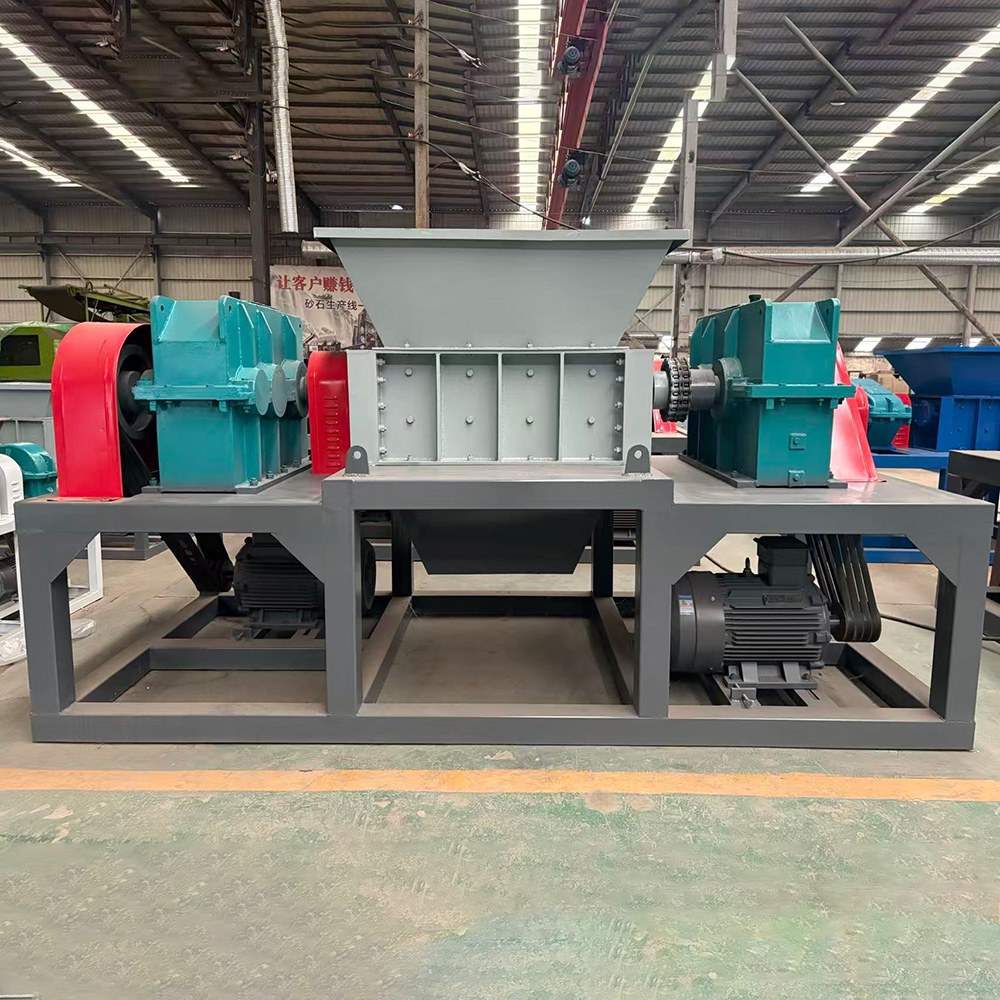
How to Read Shredder Specifications: Matching Chamber Size, Motor Power, Blade Diameter and Thickness to Your Material
Published in News & Insights · Tech & Maintenance
By Henan Jiacui Intelligent Equipment Co., Ltd.
Two shredders with the same nominal motor power can behave completely differently on the same material, and two machines with different power ratings can be equally suitable. Specification sheets are frequently compared on the one number that is easiest to read — motor power — which is close to the least informative figure on the page.
This article explains what each specification actually governs, and how to use them together to select a machine. Reference figures are from our own double-shaft range, which spans eight models.
Working Chamber: What Fits In, and How Much Per Hour
The chamber dimensions — quoted as width × length — set the maximum item size the machine will accept and, together with rotor speed, the volumetric throughput. A 400 × 430 mm chamber takes small housings, thin-walled containers and bundled cable. A 1,500 × 1,050 mm chamber takes mattresses, furniture, drums and demolition wood.
Chamber size is a hard limit, not a guideline. If the largest item you need to process does not fit the chamber, no amount of motor power helps — and attempting to force it is a standard cause of blade and shaft damage. Measure the biggest thing you will feed, then choose.
Motor Power: Torque Availability, Not Throughput
Motor power on a double-shaft shredder is about available torque to complete a cut, not directly about tonnes per hour. Two machines with the same power can deliver very different torque depending on gearbox ratio and rotor speed, and torque is what actually tears material.
Across our range, power scales with chamber and blade size:
Model | Chamber (mm) | Motor power | Blade dia. | Blade thk. |
|---|---|---|---|---|
Model 400 | 400 × 430 | 7.5 kW × 2 | Ø216 mm | 19 mm |
Model 600 | 600 × 430 | 15 kW × 2 | Ø216 mm | 20 mm |
Model 800 (Ø316) | 800 × 630 | 22 kW × 2 | Ø316 mm | 30 mm |
Model 800 (Ø400) | 800 × 800 | 30 kW × 2 | Ø400 mm | 40 mm |
Model 1000 (Ø316) | 1,000 × 630 | 30 kW × 2 | Ø316 mm | 30 mm |
Model 1000 (Ø400) | 1,000 × 800 | 37 kW × 2 | Ø400 mm | 50 mm |
Model 1200 | 1,200 × 800 | 45 kW × 2 | Ø400 mm | 50 mm |
Model 1500 | 1,500 × 1,050 | 75 kW × 2 | Ø550 mm | 50 mm |
Note the two 800 models and the two 1000 models: same nominal model size, different blade specification and different power. The Ø400 variants with thicker blades and more power are for denser, more contaminated material; the Ø316 variants cut finer and draw less power. That is a more meaningful distinction than the model number.
Blade Diameter: Reach, Bite and Torque Arm
Blade diameter governs three things. It sets how deep a hook can bite, it sets the torque arm — a larger diameter blade delivers more cutting force for the same shaft torque — and it constrains the maximum practical blade thickness.
Our range steps from Ø216 mm (models 400 and 600) through Ø316 mm and Ø400 mm to Ø550 mm on the model 1500. Larger diameter is not automatically better: it demands more torque from the drive, and on light material it is unnecessary. Match it to material density.
Blade Thickness: Output Size and Contamination Tolerance
Blade thickness is the specification most often chosen wrongly, because it is a direct trade-off. Thicker blades tolerate contamination and shock loading but produce coarser output; thinner blades cut finer and use less power but are vulnerable to hidden metal and mineral grit.
Accepted industry practice maps thickness to application roughly as follows:
Blade thickness | Typical application |
|---|---|
10–20 mm | Plastic film, woven bags, paper, chemical fibre |
20–30 mm | Hard plastic bottles, small e-waste, rubber strip |
40–50 mm | Wood pallets, mixed municipal waste, thick-walled pipe |
60–75 mm | Scrap car bodies, engine shells, heavy steel |
Our 19–20 mm blades (models 400 and 600) suit film and light packaging; 30 mm (800 and 1000 Ø316) suits rigid plastics and e-waste; 40–50 mm (800 and 1000 Ø400, 1200, 1500) suits pallets, municipal waste and heavy mixed industrial material.
A practical rule: if your feed may contain hidden metal or mineral contamination, specify one thickness step thicker than the material alone would suggest. The cost of a shattered blade set and the associated downtime exceeds the throughput you give up.
Blade Count and Output Size
Blade count — the number of blades on each shaft — together with hook geometry determines how many cutting points engage per revolution. More blades of the same thickness on a longer shaft means more simultaneous cuts and finer, more consistent output.
Across the range: 19 blades on the model 400, 29 on the 600, 26 on the 800 (Ø316), 20 on the 800 (Ø400), 33 on the 1000 (Ø316), 20 on the 1000 (Ø400), 24 on the 1200, and 30 on the 1500. The variation reflects the balance between blade thickness, shaft length and target output — the 800 Ø400 has fewer, thicker blades than the 800 Ø316 because it is specified for coarser, tougher duty.
Shaft Diameter and Bearing Size: The Durability Tell
These two are the specifications experienced buyers look at first, because they reveal how the machine will survive shock loading. Shaft diameter grows from Ø107 mm (models 400 and 600) through Ø155 mm and Ø180 mm to Ø245 mm (model 1500), and the bearings scale with it — 22219, 22222, 22232 and 22240 spherical roller bearings respectively.
All are spherical roller bearings, which is significant. A shredder shaft deflects under load; a self-aligning bearing tolerates that deflection, while a rigid bearing would load its rollers edge-on and fail. If you are comparing two machines of similar power, compare shaft diameter and bearing size — that is where the difference in service life usually is.
Rotational Speed: Low Speed Means High Torque
Our double-shaft range runs at 10–12 r/min. That is not a limitation; it is the design intent. Low-speed, high-torque shear is what allows these machines to tear bulky, tough and contaminated material that would destroy a high-speed impact machine.
The trade-off is throughput: low speed means lower volumetric capacity than a fast granulator on the same power. This is precisely why lines use both — a slow double-shaft shredder for primary reduction, then a faster screen-classified granulator for calibrated secondary sizing. If you see a double-shaft machine advertised with a high rotor speed, check what material it is actually intended for.
Putting It Together: Selection by Material
Your material | Recommended model | Why |
|---|---|---|
Plastic film, woven bags, light packaging | Model 400 / 600 | 19–20 mm blades cut finely; lowest power demand |
Bottles, containers, small e-waste, cable | Model 600 / 800 (Ø316) | 20–30 mm blades; good balance of fineness and tolerance |
Wood pallets, crates, drums | Model 800 (Ø400) | 40 mm blades tolerate nails and dense hardwood |
Municipal solid waste, bulky waste | Model 1200 / 1500 | Large chamber, 50 mm blades, heaviest shaft and bearings |
Mixed industrial waste, purgings | Model 1000 (Ø400) / 1200 | 50 mm blades handle unknown contamination |
PCB / e-waste pre-crushing | Model 800 / 1000 (Ø316) | 30 mm blades; abrasive laminate needs moderate thickness and good access |
The Three Questions That Matter More Than the Spec Sheet
- What is the largest single item? Sets the chamber size — a hard limit.
- What contamination is possible? Sets blade thickness and material. Hidden metal is the single biggest blade killer.
- What output size do you need, and what consumes it? If something downstream requires a specific size, that determines whether you need a screen-classified secondary stage.
Answer those three and the specification selection largely makes itself. Motor power is then a check, not a starting point.
Frequently Asked Questions
Is more motor power always better?
No. Power indicates available torque, but throughput depends on chamber size, blade geometry and rotor speed too. An oversized machine costs more to buy and to run, and on light material it delivers nothing extra. Size the machine to your largest item and your contamination risk first, then confirm power.
Should I choose thicker or thinner blades?
Thicker blades survive contamination and shock loading but produce coarser output; thinner blades cut finer and use less power but are vulnerable to hidden metal. If your feed may contain metal or mineral grit, go one thickness step thicker than the material alone suggests.
Why is the rotational speed so low?
Low speed with high torque is the design intent for double-shaft shredders. It is what allows the machine to tear bulky, tough and contaminated material rather than impacting it. If you need fine, calibrated output, use a screen-classified granulator as a second stage rather than trying to get it from the primary shredder.
Do I need one shredder or two stages?
It depends on your output requirement. If coarse 40–100 mm reduction is enough — as for RDF feed or transport volume reduction — one double-shaft shredder suffices. If something downstream needs a calibrated size, add a single-shaft shredder with a screen as the second stage.
Get a Specification Review
Send Jiacui your material type, largest item dimensions, target throughput and required output size, and we will recommend a model, blade specification and drive configuration with layout and power requirements. Contact us for a selection review.