
Why Compact Dry Granulators Like the Model 300 Are Reshaping Small-Scale Recycling
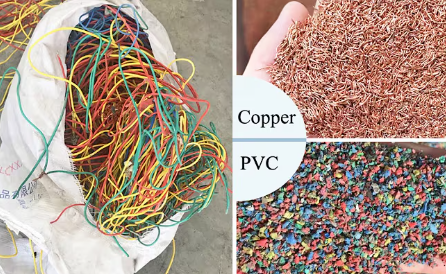
Entry-Level Copper Recovery: Why Compact Dry Granulators Like the Model 300 Are Reshaping Small-Scale Recycling
Published in News & Insights · Copper Wire Recycling Technology
By Henan Jiacui Intelligent Equipment Co., Ltd.
Introduction: Not Every Recycling Business Starts at Industrial Scale
In the previous article in this series, we examined how the RC-CWG1000 answers the copper industry's need for 24/7, 1,000 kg/h industrial throughput — and how the global shift toward secondary copper is pushing large plants toward dual-path, high-capacity architecture.
But the reality is that most recycling businesses do not begin at that scale. They begin in a workshop, a scrap yard, or a small processing bay — with limited floor space, a single operator, and a need to turn a modest daily volume of waste cable into clean, salable copper as quickly as possible.
That is exactly the gap the Model 300 Copper Wire Granulator was designed to fill. At 100–120 kg/h, 11.65 kW total power, and a footprint of just 2,300 × 950 × 2,000 mm, the Model 300 is proof that dry, high-purity copper recovery is no longer limited to plants with 10,000 mm floor space. It brings the same zero-water, zero-chemical separation principles to the small operator — and, just as importantly, it becomes the first step on a scalable equipment path that can grow with the business.
The Small-Scale Opportunity: Volume Is Fragmented, Margins Are Not
The economics of cable recycling are often underestimated at the entry level. A small workshop processing even modest daily volumes can capture meaningful margin — provided recovery is clean and operating cost is low.
Consider the arithmetic. At 100–120 kg/h, a single-shift Model 300 handles roughly 0.8–1.0 tonne of cable per day. Copper content in typical mixed scrap cable ranges from 30–70% depending on type. At today's copper price environment — with LME copper having risen to record levels around US$11,000/tonne in 2025 — even a modest operation is moving a valuable commodity . And because dry granulation operates with roughly one operator versus three to four for equivalent wet facilities, the labor advantage that makes large plants profitable applies just as strongly at small scale .
The catch is the same one the industry has always faced: recovery efficiency. Burn the jacket off, and you recover perhaps 70–80% of the copper while releasing toxic fumes. Soak it, and you generate contaminated wastewater. Neither is acceptable under modern environmental standards — which is why the small operator's best route is the same dry, fully physical process the big plants use.
The Model 300: Compact Machine, Full Dry-Process Chemistry
What makes the Model 300 notable is not that it compromises on separation quality — it is that it delivers the complete four-stage dry process in a chassis weighing just 680 kg.
Parameter | Model 300 Specification |
|---|---|
Output Capacity | 100 – 120 kg/h |
Total Installed Power | 11.65 kW (Two-phase electricity) |
Main Unit Power | 5.5 kW |
Variable-Frequency Fan | 2.2 kW |
Dust Collection Fan | 1.5 kW |
Gravity Separator | 2.2 kW |
Vibrating Screen | 0.25 kW |
Blade Configuration | 6 × SKD-11 (HRC 58–62) |
Voltage / Frequency | 220 / 380 V, 50 Hz (customizable) |
Footprint (L × W × H) | 2,300 × 950 × 2,000 mm |
Weight | 680 kg |
How It Works — The Same Four Stages, Tightly Integrated
1. Size Reduction
Scrap cables feed into the granulation chamber, where a rotor equipped with 6 durable SKD-11 blades shears them into 2–5 mm copper–plastic particles. SKD-11 tool steel (HRC 58–62) ensures long blade life even with tough jacketed cable. The 6-blade rotor is purpose-sized for the 100–120 kg/h range: enough cutting edges for a clean, uniform particle without over-building the drive.
2. Airflow & Gravity Separation
The crushed mixture enters the gravity separator (2.2 kW), where calibrated airflow exploits the density gap between copper (≈8.9 g/cm³) and PVC/XLPE/PE insulation. Heavy copper settles; light plastic is carried upward. This single stage establishes the baseline purity.
3. Vibrating-Screen Refinement
A 0.25 kW vibrating screen performs the final precision sort, filtering stray mixed particles. The result: ≥99.5% copper purity as standard — the same smelter / re-melt spec targeted by machines ten times the Model 300's size .
4. Dust Collection
A 1.5 kW dust collection fan draws fines to a pulse-jet baghouse, keeping the workspace clean and below workshop dust limits. No water. No chemicals. No wastewater discharge.
The key point: purity does not scale with footprint. The Model 300 achieves the same ≥99.5% standard as the RC-CWG1000 — it simply processes less of it per hour. For the small operator, that is the entire value proposition.
Why Compact Works: Three Advantages Unique to Entry Scale
1. Minimal Footprint, Minimal Infrastructure
At 2,300 × 950 mm, the Model 300 fits through a standard workshop door and into a 15 m² bay. There is no need for a purpose-built plant, no concrete foundation requirement, and no water supply or drainage — just a single-phase or two-phase power connection. Setup is measured in hours, not weeks.
2. Low Capital, Fast Payback
With the lowest total power draw in the Jiacui line (11.65 kW), the Model 300 keeps electricity cost per tonne competitive while demanding the smallest upfront investment. For a workshop moving 0.8–1.0 tonne per day, the combination of high recovery, one-operator operation, and no consumables beyond blade regrinding produces a payback measured in months rather than years.
3. A Genuine First Step — Not a Dead End
This is the point most often missed. The Model 300 is not a separate, orphan product; it is the entry model of a single, scalable granulator family. The SKD-11 blade philosophy, the gravity-separation principle, the PLC/VFD control logic, and the dust-collection architecture are all shared with the Model 400, RC-CWG660, and RC-CWG1000. An operator who masters the Model 300 has already learned the workflow of the entire line.
The Scalable Path: One Workflow, Four Capacities
This is where the small operator's strategy becomes clear. The Jiacui granulator line is designed so that capacity upgrades do not mean starting over — they mean bolting on throughput:
Model | Capacity | Total Power | Blades | Footprint (L×W×H) | Weight | Best For |
|---|---|---|---|---|---|---|
Model 300 | 100–120 kg/h | 11.65 kW | 6 | 2.3×0.95×2.0 m | 680 kg | Workshops, batch processing, start-ups |
Model 400 | 350–400 kg/h | 27.94 kW | 12 | 3×4.6×2.35 m | 2,000 kg | Mid-volume yards, regular shifts |
RC-CWG660 | 600–650 kg/h | 40.24 kW | 14 | 4×5.6×2.4 m | 3,000 kg | High-volume plants |
RC-CWG1000 | 900–1,000 kg/h | 77.48 kW | 18 | 10×8.5×3.0 m | 5,000 kg | Industrial, 24/7, 10–25 t/day |
The step up the line is driven by three variables: blade count, rotor power, and air-system capacity. A business that begins on the Model 300 and grows into a Model 400 or RC-CWG660 retains the same material-handling know-how, the same maintenance discipline, and the same supplier relationship.
A practical growth scenario:
Year 1: Model 300 processes 0.8–1.0 t/day of household wire and appliance cord. Copper is sold directly to a local smelter or re-melt facility.
Year 2: Volume grows; a double-shaft shredder (such as the Jiacui Model 400, single- or dual-drive) is added upstream to pre-cut long cables and bulky harnesses, unlocking cleaner feed for the granulator.
Year 3: Throughput demand passes 300 kg/h; the business upgrades to a Model 400 granulator, with the original Model 300 retained for specialized or low-volume runs.
This is how a single workshop becomes a complete recycling line — and it begins with choosing the right entry machine.
What the Market Says: Recovery and Formality Are the Constraints
The broader context reinforces the opportunity. Analysts project recycled copper rising from roughly 5 million tonnes today to 8.9 million tonnes by 2035 — yet even that expansion will leave a 3.6-million-tonne supply shortfall . At the same time, McKinsey estimates that no more than 60% of post-consumer scrap currently enters the formal value chain .
Two implications follow for the small operator:
The feedstock is available. More than 5 million tonnes of waste cable enter the global recycling stream each year , and the volume is growing as the energy transition accelerates cable replacement.
The formal, efficient processors will capture the margin. Equipment that delivers ≥99.5% purity with zero pollution is precisely what separates formal, bankable recycling from the informal burning and rudimentary stripping that regulators are progressively eliminating under frameworks such as the EU Circular Economy Action Plan and national WEEE rules .
The Model 300 is, in this sense, an enabler of formalization: it gives the small operator the same recovery standard the industry's largest plants use.
Conclusion: Start Small, Recover Clean, Scale When Ready
The copper industry's secondary-supply challenge is often discussed in terms of megaprojects and million-tonne gaps. But the capacity gets built one workshop at a time — and it starts with equipment that makes clean recovery accessible, affordable, and scalable.
The Model 300 Copper Wire Granulator is Jiacui's entry into that journey: a 680 kg, 15 m², 11.65 kW dry-process system that delivers ≥99.5% copper purity and integrates seamlessly into a growth path toward the Model 400, RC-CWG660, and RC-CWG1000.
Henan Jiacui Intelligent Equipment Co., Ltd. backs every Model 300 with CNC-machined rotors, in-house blade hardening, pre-shipment trial runs, and customizable voltage, frequency, blade material, and OEM branding for distributors in Europe, North America, Southeast Asia, and Africa.
Whether you are processing your first tonne or scaling your tenth, the principle is the same: recover more copper, at higher purity, from more varied feedstock. Start with the Model 300 — and grow the line as your volume grows.
About Henan Jiacui Intelligent Equipment Co., Ltd.
We design and manufacture the complete cable-recycling equipment line — from double-shaft shredders for upstream pre-cutting to dry-type copper wire granulators from 100 kg/h to 1,000 kg/h. Explore the full range: Model 300 · Model 400 · RC-CWG660 · RC-CWG1000.
Related reading:
[Scaling Cable Recycling to Industrial Capacity: Engineering the RC-CWG1000 for the Secondary Copper Era] (previous article — flagship / large-scale counterpart)
[How Dry Separation Achieves 99.5%+ Copper Purity]
[Single-Drive vs. Dual-Drive Double Shaft Shredders: Which Fits Your Feed?]
[Building a Complete Cable-Recycling Line: From Shredder to Granulator]
Keywords: copper wire granulator, entry level copper granulator, small scale cable recycling, dry type copper separator, Model 300, 100kg/h copper granulator, SKD-11 blades, gravity separation, secondary copper, WEEE recycling, recycling business start up, Jiacui