
How Dry-Type Copper Cable Granulation Works
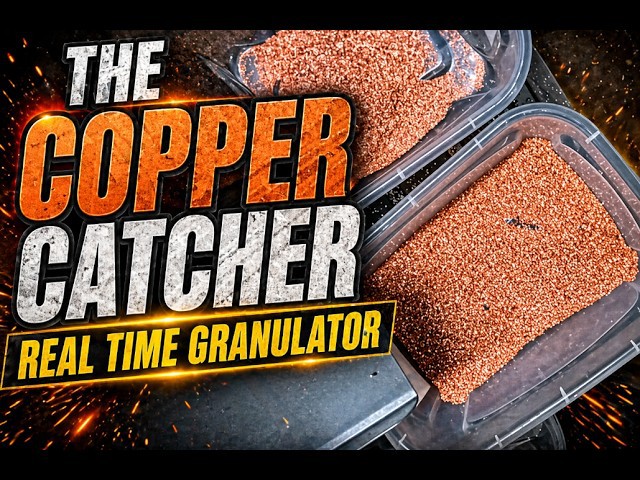
Dry-Type vs Wet-Type Wire Granulators: Which Should You Choose?
Published in News & Insights · Buyer's Guide
By Henan Jiacui Intelligent Equipment Co., Ltd.
The Question Every Cable Recycler Faces
When you decide to stop burning, stop stripping by hand, and start processing scrap cable mechanically, one choice shapes everything that follows: dry separation or wet separation?
It is not a technical footnote. It is the decision that determines your footprint, permitting timeline, labor count, utility bills, copper resale price, and — increasingly — whether your operation is even legal to run.
At Henan Jiacui Intelligent Equipment Co., Ltd., we manufacture dry-type copper wire granulators exclusively — from the Model 300 (100–120 kg/h) to the RC-CWG1000 (900–1,000 kg/h). We have a clear point of view, but the choice should be yours based on facts. So in this guide we will compare the two processes honestly: how they work, where each wins, where each fails, and how to match the right machine to your cable volume and your jurisdiction.
The Core Difference: Air and Electrostatics vs. Water and Gravity
Both machines exist to do the same thing — separate copper from polymer jacket and deliver "copper rice" ready for sale. They just use different media to get there.
Dry-type granulators are the clean mechanics of cable recycling. No water enters the process at any stage. Cables are crushed into 2–5 mm copper–plastic particles, then separated by airflow and density (gravity separation), with a vibrating screen for secondary polishing. For fine hair-wire and enameled wire, an electrostatic separator adds a final precision pass: conductive copper is attracted to the electrode, non-conductive plastic is rejected by inertia . The result is bone-dry copper ready for immediate sale.
Wet-type granulators bring water in as the separation medium. Crushed material is dropped into water tanks or onto vibrating shaker tables; copper (≈8.9 g/cm³) sinks, plastic floats, and the two are raked or conveyed apart . It is mechanically simple — and, for clean, uniform feedstock, capable of very high purity.
Stage | Dry Type | Wet Type |
|---|---|---|
Size reduction | Crusher + SKD-11 blades | Crusher, often gentler |
Separation medium | Airflow + gravity + electrostatics | Water (density / float-sink) |
Fine-wire polish | Electrostatic separator (optional) | Shaker table / hydrocyclone |
Drying step | None — output is dry | Required before sale |
Waste stream | Zero wastewater (only dust, captured) | Contaminated process water |
Six Factors That Decide the Choice
1. Copper Purity and Oxidation — Where Wet Hides a Cost
On paper, both processes can reach the high 99%s. In practice, dry-processed copper leaves the machine bright and ready for market — it retains its natural reddish finish and full electrical conductivity .
Wet-processed copper is another story. If not dried immediately after separation, water oxidizes the copper surface — and oxidation is a silent profit killer. Industry buyers routinely test shipments with XRF analyzers; oxygen-contaminated copper is discounted on the spot, with some buyers deducting up to 15% from their offer . One analysis estimates the oxidation effect alone can lower copper purity by 2–5%, translating to hundreds of dollars less per tonne in resale value .
With a well-tuned dry system — particularly one equipped with an electrostatic stage — ≥99.5% purity is standard, rising to 99.8–99.9% on fine wire . That is smelter- and re-melt-ready copper, with no drying penalty.
The takeaway: wet systems can match dry purity in the lab. Dry systems deliver that purity in the real world, without a drying bottleneck.
2. Water, Wastewater, and the Permitting Maze
This is where the long-term picture tilts decisively toward dry.
Wet separation consumes a meaningful volume of fresh water and generates a contaminated effluent stream — loaded with fine copper, microplastics, oils, and residues from PVC, XLPE, and legacy halogenated jackets. Even with closed-loop circulation and settling tanks, the system needs sludge removal, anti-seepage lining, water-quality maintenance, and a discharge permit.
Regulators are explicit about the burden. Under the UK's WEEE permitted-facility guidance, discharges from mechanical treatment are monitored monthly against strict limits — total suspended solids ≤60 mg/L, hydrocarbon oil ≤10 mg/L, copper ≤0.5 mg/L, lead ≤0.1 mg/L — with metal and metalloid monitoring required at least every six months . The EU WEEE framework and the Water Framework Directive impose parallel requirements; some jurisdictions are moving toward zero-wastewater-discharge targets, and reports indicate compliance upgrades costing facilities into the millions of euros .
Dry granulation eliminates the entire category:
Zero fresh water consumption
Zero wastewater discharge
No settling ponds, no sludge handling, no discharge monitoring
That is not just an environmental claim — it is the difference between a 2-day installation and a 10–15-day construction project. In drought-prone regions and in markets with tightening water rules, it is often the difference between permitted and unpermitted.
3. Footprint and Installation
Dry Type | Wet Type | |
|---|---|---|
Typical floor area (incl. operation) | 30–50 m² | 200–500 m² (tanks, ponds, drying) |
Installation time | ~2 days (level, connect power) | 10–15 days (excavation, tanks, plumbing) |
Foundation | Simple | Slab + anti-seepage |
The contrast is stark. A dry granulator line fits through a standard workshop door. The Jiacui Model 300, for example, occupies just 2,300 × 950 mm and weighs 680 kg — a genuine one-bay, one-operator installation. A wet line needs land for settling tanks and drying fields; one operator we spoke to rented adjacent land solely for water infrastructure.
4. Labor and Operating Cost
This is where dry systems turn the economics decisively.
Dry: roughly one operator runs the line — PLC + VFD-controlled airflow and rotor speed do the adjustment automatically
Wet: typically 3–4 operators across crushing, water-chemistry monitoring, sludge removal, and drying
Over a three-year mid-sized operation (≈5 t/day), one industry cost analysis found wet systems running about 40% higher operating cost than dry — before accounting for environmental fines in tightly regulated regions . The drivers: water pumping, water treatment chemicals, electricity for drying, and the labor to run it all.
5. What Each Process Handles Best
To be fair, wet separation has legitimate strengths — and acknowledging them helps you choose correctly.
Wet systems shine when:
Feedstock is homogeneous (e.g., pure telecom or polyethylene-insulated cable)
Wire is very fine (<0.5 mm) and uniform — water can handle these cleanly
You are already co-located with a treatment plant and have cheap water and disposal
You process oily or dirty cable that benefits from a wash stage
Dry systems dominate when:
Feedstock is mixed and real-world: household wire, appliance cord, automotive harness, WEEE internal wire, PVC/XLPE/rubber jackets
You need one machine for varied input rather than a dedicated line per cable type
Water access, water cost, or permitting is a constraint
You want maximum copper value per tonne (no oxidation discount)
The global trend is unambiguous: dry granulation accounts for the majority of new installations, as modern dry systems have matched wet purity levels even on fine wire thanks to electrostatic separation . China, once a hub of wet-system manufacturing, now predominantly exports dry granulators .
6. The Scalability Question
Here is the constraint wet systems impose: every scaling step costs infrastructure. Bigger tank, bigger pond, bigger dryer, bigger permit.
Dry systems scale by throughput per hour — and that is exactly the path Jiacui's product line is built on:
Model | Capacity | Total Power | Blades | Footprint (L × W × H) | Best For |
|---|---|---|---|---|---|
Model 300 | 100–120 kg/h | 11.65 kW | 6 × SKD-11 | 2.3 × 0.95 × 2.0 m | Workshops, start-ups, batch runs |
Model 400 | 350–400 kg/h | 27.94 kW | 12 × SKD-11 | 3 × 4.6 × 2.35 m | Mid-volume yards, regular shifts |
RC-CWG660 | 600–650 kg/h | 40.24 kW | 14 × SKD-11 | 4 × 5.6 × 2.4 m | High-volume plants |
RC-CWG1000 | 900–1,000 kg/h | 77.48 kW | 18 × SKD-11 | 10 × 8.5 × 3.0 m | Industrial, 24/7, dual air circuit |
The separation principle — crushing → airflow gravity separation → vibrating-screen refinement → optional electrostatics — is identical across every model. A workshop that masters the Model 300 already knows the workflow of the RC-CWG1000. Scaling means bolting on throughput, not starting over.
So, Which Should You Choose?
Answer these five questions honestly:
Is your water cheap, abundant, and permitted? If no → dry.
Is your feedstock mixed and changing daily? If yes → dry.
Do you need to maximize copper resale value per tonne? If yes → dry (avoid the oxidation discount).
Are you constrained on space or installation time? If yes → dry.
Do you process exclusively clean, uniform, fine telecom cable — and have a treatment plant next door? Only then does wet become a serious case.
For the vast majority of recyclers, scrapyards, WEEE processors, cable manufacturers, and demolition crews, the answer is dry-type. The environmental compliance advantage alone is increasingly decisive; the labor and water savings compound it; and the resale premium on bright, oxidation-free copper pays it back.
Wet separation is not obsolete — it remains a valid choice for a narrow, specific feedstock profile. But it is no longer the default. It is an option you choose with eyes open to the water, sludge, drying, and permitting commitments that come with it.
The Jiacui Dry-Type Line: A Path From 100 kg/h to 1,000 kg/h
If you choose dry — as most operators now do — the next question is capacity, not process. And that is a simpler decision than it looks.
Start where your daily volume sits:
~1 tonne/day → Model 300. One operator, 15 m² bay, 11.65 kW. Entry into clean recovery.
~3–4 tonnes/day → Model 400. 18.5 kW main crusher, 12-blade rotor, integrated dust collection.
~5–7 tonnes/day → RC-CWG660. 30 kW crusher, 14 blades, 3 kW gravity separator.
~10–25 tonnes/day → RC-CWG1000. 55 kW crusher, dual air circuits (twin VF + twin dust fans), 6 kW separator, built for 24/7.
Every model shares the same engineering DNA:
SKD-11 blades (HRC 58–62), 600–1,200 h life per regrind
PLC + VFD control auto-adjusting to wire diameter (0.2–30 mm)
Pulse-jet baghouse dust collection — closed-loop, ≤82 dB(A)
Optional electrostatic separator for 99.8%+ purity on fine wire
Customizable voltage / frequency (220 / 380 / 415 / 480 V, 50 / 60 Hz) and OEM branding
And every line starts cleaner: add a Jiacui double-shaft shredder upstream to pre-cut long cables and armored harnesses, and you have a complete, scalable recycling plant built entirely on the dry process.
Conclusion
Dry or wet is not a toss-up. It is a match between your feedstock, your jurisdiction, and your growth plan.
Dry-type granulation wins on zero wastewater, minimal footprint, one-operator operation, no oxidation discount, and a clear scaling path. Wet separation remains viable for uniform, fine, water-abundant, treatment-adjacent operations — but it carries water, sludge, drying, and permitting costs that grow with every tonne.
At Jiacui, we have bet the product line on dry — because we believe the future of cable recycling is clean, continuous, and scalable. Whether you are processing your first tonne on a Model 300 or running twenty-four hours a day on an RC-CWG1000, the principle is the same:
Recover more copper, at higher purity, from more varied feedstock — without polluting a drop of water.
About Henan Jiacui Intelligent Equipment Co., Ltd.
We design and manufacture the complete cable-recycling equipment line — from double-shaft shredders for upstream pre-cutting to dry-type copper wire granulators from 100 kg/h to 1,000 kg/h. Explore the full range: Model 300 · Model 400 · RC-CWG660 · RC-CWG1000.
Need help choosing capacity? Contact our engineering team for a free feedstock assessment and a recommended line configuration — including upstream shredding and optional electrostatic separation.