
Global Copper Demand Accelerates Growth of Cable Recycling Equipment
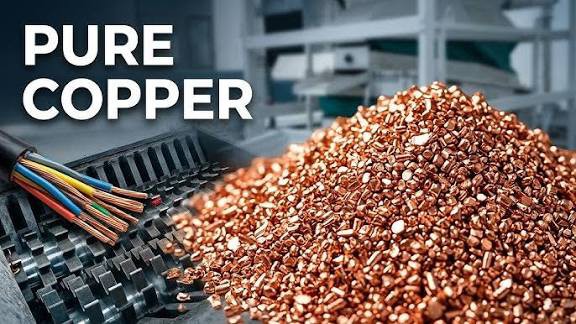
Global Copper Demand Accelerates Growth of Cable Recycling Equipment
Published in News & Insights · Industry Trends
By Henan Jiacui Intelligent Equipment Co., Ltd.
A 9.6-Million-Tonne Gap — And Why Your Granulator Just Became Strategic
For most of its history, copper recycling was a backroom operation: burn the jacket, strip the wire, sell the copper. No longer. In 2025, copper is the bottleneck of the energy transition — and the cable-recycling granulator has become a front-line piece of industrial equipment.
The numbers explain why. Global refined copper supply is on track to fall short of demand by 6.0 million tonnes in 2025, widening to a staggering 9.6 million tonnes by 2035 according to one industry forecast . Bloomberg Intelligence puts the shortfall at 10 million tonnes by 2030 . In 2024, nearly two-thirds of the copper market was in deficit .
This is not a commodity blip. It is a structural imbalance between flatlining mine supply and explosive demand from EVs, grids, data centers, and renewables. And it is the single most important reason that cable-recycling equipment is now one of the fastest-growing segments in solid-waste machinery.
At Henan Jiacui Intelligent Equipment Co., Ltd., we build the machines that turn waste cable into high-purity copper — from the Model 300 (100–120 kg/h) to the RC-CWG1000 (900–1,000 kg/h), plus the double-shaft shredders that feed them. In this article, we look at the forces driving demand and what they mean for recyclers, scrapyards, and WEEE processors worldwide.
The Demand Surge: Copper Intensity Has Rewritten the Equation
The clean-energy transition is a copper transition. Every unit of fossil-fuel generation replaced by wind, solar, storage, or electrified transport requires materially more copper — and the data is striking.
Goldman Sachs estimates that data centers alone could account for up to 23% of global copper demand growth by 2030, with each gigawatt of capacity requiring roughly 60,000 tonnes of copper . Some facilities use 267 tonnes of copper per MW — nearly four times the density of a conventional office building . AI data centers are projected to consume 25% of U.S. grid capacity by 2030, up from just 3% in 2023 .
It compounds from there:
Demand Driver | Copper Intensity |
|---|---|
EV vs. Internal Combustion | 3–4× more copper per vehicle (≈60 kg vs. 20 kg) |
Hybrid vehicles | 2× a comparable gas-powered car |
U.S. power grid (Biden plan) | 3.7 million miles of new transmission lines |
Global grid capex | US$4.4–5.8 trillion by 2050 |
Global copper demand 2025 → 2035 | 28 → 38 million tonnes |
The signal is unambiguous: electrification is copper-intensive by design, and the equipment to supply it must be built, mined, and recycled faster than ever before.
The Supply Constraint: Mining Cannot Keep Up
On the supply side, the story is one of grade decline and project delay.
Mined copper output grew just 1.0% in 2024, despite rising demand . Major assets have been hobbled by operational setbacks — Grasberg and Kamoa-Kakula among them — contributing to the widening deficit . S&P Global warns that if the world is to reach net-zero by 2050, copper production must more than double by 2035 .
Meanwhile, ore grades are falling by 0.2–0.5% per year, and the industry faces a shortage of 30,000 mining engineers by 2030 . New projects are slow and capital-intensive: a major proposed U.S. copper mine carries an estimated US$16 billion in development costs and 29 years of permitting delays .
The implication: even under optimistic scenarios, primary mining cannot close the 9.6-million-tonne gap. The balance must come from secondary copper — and that means recycling capacity.
Secondary Copper: From Backroom to Mainstream
Here the picture is encouraging, but the gap remains vast.
Recycled copper already accounts for a meaningful share of supply: 32–35% of global copper comes from scrap . It is the third-largest source of supply after Chile and Peru . Projections point to 8.9 million tonnes of recycled copper by 2035 — but that still leaves a 3.6-million-tonne shortfall, and analysts estimate more than 1 million tonnes of additional recycling capacity will be needed beyond current projections .
The headroom in feedstock is enormous. The global scrap cable and wire recycling market was valued at US9.8 billion by 2033 (CAGR 6.5%) . Some estimates put the waste-cable stream at more than 5 million tonnes per year . The circularity gap is equally striking: only 30% of copper globally is recycled, versus 80% for steel .
Three conclusions follow for equipment manufacturers and recyclers:
The feedstock is available — and growing as energy infrastructure is replaced.
The formal, efficient processors will capture the margin as informal burning and rudimentary stripping are progressively regulated out of existence.
Recovery efficiency is the new competitive weapon — every 0.5% improvement in copper recovery is tonnes of salable metal per year.
Policy Tailwinds: The Regulatory Floor Is Rising
The demand acceleration is being reinforced by policy — and this is where equipment choice becomes a compliance question, not just an economic one.
European Union: the Circular Economy Action Plan and WEEE Directive set collection and recovery targets; the Right to Repair movement extends product lifespans and feeds the future scrap stream .
United Kingdom: WEEE Regulations 2013 (amended 2025) require permitted facilities to monitor discharges — total suspended solids ≤60 mg/L, hydrocarbon oil ≤10 mg/L, copper ≤0.5 mg/L, lead ≤0.1 mg/L — with metal and metalloid monitoring at least every six months .
United States: a new copper tariff regime (50% on foreign copper by 2027) is designed to incentivize domestic refining and recycling capacity .
China: 14th Five-Year Plan circular-economy targets and the "3060" carbon neutrality pledge are driving formalization of the scrap sector.
The direction is consistent: zero-wastewater, high-recovery, traceable recycling is becoming the permitted norm. This is precisely why dry-type granulation — zero water, zero chemicals, ≥99.5% purity — is displacing wet processes across new installations. (See our comparison: Dry-Type vs Wet-Type Wire Granulators: Which Should You Choose?.)
What This Means for the Equipment Market
The strategic value of copper is translating directly into equipment demand. The global copper-recycling equipment market was valued at US1.8 billion by 2033 (CAGR 5.2%) . The broader cable-recycling segment is expected to grow from US1.4 billion (2034) .
The fastest growth is concentrated in three regions:
Region | Driver |
|---|---|
Asia-Pacific | >45% market share; China dominates scrap processing and granulator manufacturing |
Europe | Strict WEEE / circular-economy compliance, mature collection infrastructure |
North America | 16.3% CAGR; reshoring, tariff-driven refining incentives, grid modernization |
The industry is also consolidating around turnkey solutions — plant layout, equipment selection, installation, operator training, and maintenance support — rather than standalone machines . That is a decisive shift for manufacturers and buyers alike.
The Jiacui Response: A Scalable Line for a Scaling Market
At Jiacui, we have built our product line around the reality that cable-recycling capacity must scale with the copper gap — from the small workshop to the 24/7 industrial plant.
Dry-Type Copper Wire Granulators (100–1,000 kg/h)
Every model uses the same zero-water, four-stage dry process — crushing → airflow gravity separation → vibrating-screen refinement → optional electrostatics — and achieves ≥99.5% copper purity (99.8%+ with electrostatic).
Model | Capacity | Total Power | Blades | Footprint (L × W × H) | Best For |
|---|---|---|---|---|---|
Model 300 | 100–120 kg/h | 11.65 kW | 6 × SKD-11 | 2.3 × 0.95 × 2.0 m | Workshops, start-ups |
Model 400 | 350–400 kg/h | 27.94 kW | 12 × SKD-11 | 3 × 4.6 × 2.35 m | Mid-volume yards |
RC-CWG660 | 600–650 kg/h | 40.24 kW | 14 × SKD-11 | 4 × 5.6 × 2.4 m | High-volume plants |
RC-CWG1000 | 900–1,000 kg/h | 77.48 kW | 18 × SKD-11 | 10 × 8.5 × 3.0 m | Industrial, 24/7 |
Double-Shaft Shredders (Upstream Pre-Cutting)
For long cables, armored harnesses, and bulky WEEE, our Model 400 single-drive (JZQ250 × 1, 4 kW) and dual-drive (JZQ250 × 2, 8 kW) shredders pre-cut feed to a uniform size — protecting granulator blades and stabilizing downstream separation.
The Scalability Principle
The separation principle is identical across every model. A workshop that masters the Model 300 already knows the workflow of the RC-CWG1000. Capacity scales by blade count, rotor power, and air-system capacity — never by replacing the know-how.
Shared engineering DNA:
SKD-11 blades (HRC 58–62), 600–1,200 h life per regrind
PLC + VFD control auto-adjusting to wire diameter (0.2–30 mm)
Pulse-jet baghouse dust collection — closed-loop, ≤82 dB(A)
Optional electrostatic separator for 99.8%+ purity on fine wire
Customizable voltage / frequency (220 / 380 / 415 / 480 V, 50 / 60 Hz) and OEM branding
A Practical Outlook: Where the Margin Goes
McKinsey is explicit: by 2035, the world will need more than 1 million tonnes of additional recycling capacity — and no more than 60% of post-consumer scrap will enter the formal value chain . The competition for feedstock will intensify. The processors who win will be those who can recover more copper, at higher purity, from more varied feedstock, with lower compliance cost.
That is the opportunity the copper gap creates. The 9.6-million-tonne shortfall is not someone else's problem — it is the addressable market for the recycling industry.
For established yards, it justifies adding throughput and recovery capacity now. For new entrants, it makes the Model 300 a credible first step toward a full line. For regions still reliant on informal burning, it creates a multi-billion-dollar formalization opportunity.
Conclusion
Copper has become the strategic metal of the energy transition — and the math says primary mining cannot meet demand. The 9.6-million-tonne gap of 2035 will be closed, in large part, by secondary copper. That makes cable-recycling equipment not a commodity purchase, but a capacity bet on the energy economy itself.
At Jiacui, we have bet the product line on dry, scalable, high-recovery granulation — because we believe the future of cable recycling is clean, continuous, and built to grow.
Whether you are processing your first tonne on a Model 300 or running twenty-four hours a day on an RC-CWG1000, the principle is the same: recover more copper, at higher purity, from more varied feedstock — and help close the gap.
About Henan Jiacui Intelligent Equipment Co., Ltd.
We design and manufacture the complete cable-recycling equipment line — from double-shaft shredders for upstream pre-cutting to dry-type copper wire granulators from 100 kg/h to 1,000 kg/h. Explore the full range: Model 300 · Model 400 · RC-CWG660 · RC-CWG1000.
Keywords: copper demand, copper supply deficit 2035, 9.6 million tonnes, energy transition, EV copper, data center copper, secondary copper, cable recycling equipment market, WEEE, circular economy, copper wire granulator, dry type granulator, Model 300, RC-CWG1000, Jiacui
Previous: None
Next: Case Study: 2 T/H Cable Recycling Line Shipped to Europe