
Plastic Recycling and Pelletizing Line: Turning Post-Consumer and Industrial Plastic Into Saleable Regrind
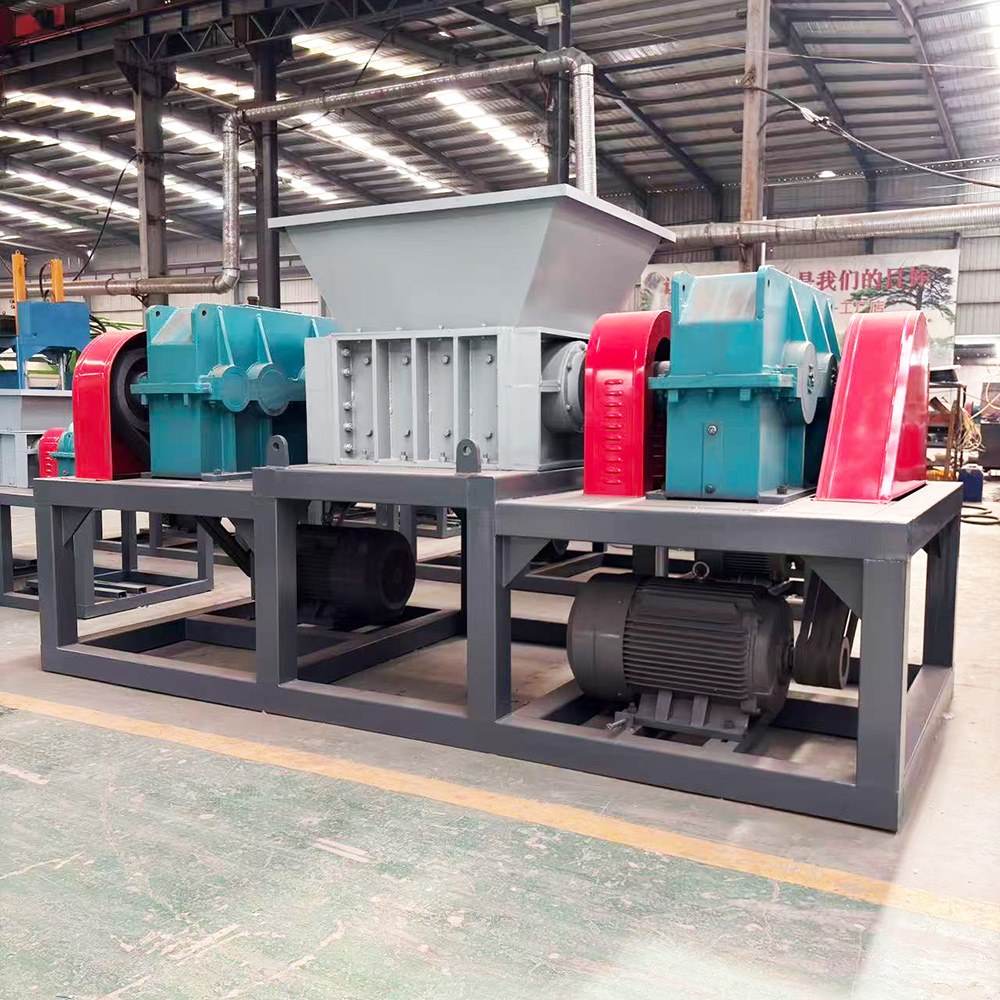
Plastic Recycling and Pelletizing Line: Turning Post-Consumer and Industrial Plastic Into Saleable Regrind
Published in News & Insights · Recycling Solutions
By Henan Jiacui Intelligent Equipment Co., Ltd.
Plastic recycling is a size-reduction problem before it is anything else. Whether the input is post-consumer bottles, industrial purge lumps, film on rolls, pipes, crates or automotive bumpers, the material has to be reduced to a consistent particle before it can be washed, separated, dried and pelletized. Get the size reduction wrong and every downstream stage suffers.
This article concentrates on the front end of the line — primary shredding and secondary granulation — which is where we supply equipment, and where most selection mistakes are made.
The Line in Outline
A complete mechanical plastic recycling line runs roughly as follows:
- Primary shredding — bulky items reduced to 40–100 mm on a low-speed double-shaft shredder.
- Pre-washing / metal removal — magnetic and eddy current separation to protect downstream equipment.
- Secondary granulation — a single-shaft shredder with a screen reduces material to a calibrated 10–20 mm for washing.
- Washing and separation — friction washing, sink-float separation to split polyolefins from PET and PVC, rinsing.
- Drying — centrifugal and thermal drying to moisture levels pelletizing can tolerate.
- Pelletizing — extrusion, filtration (melt screen changer), strand or die-face cutting, cooling and bagging.
Choosing Blade Thickness by Polymer Form
The single most consequential decision on a plastic shredder is blade thickness, because it sets both output particle size and the machine's tolerance for contamination. Industry practice groups it roughly as follows:
Blade thickness | Typical output width | Suitable materials |
|---|---|---|
10–20 mm | 10–20 mm | Plastic film, woven bags, paper, chemical fibre |
20–30 mm | 20–30 mm | Hard plastic bottles, small e-waste, rubber strip |
40–50 mm | 40–50 mm | Wood pallets, mixed municipal waste, thick-walled pipe and purgings |
60–75 mm | 60–75 mm | Scrap car bodies, engine shells, heavy steel |
Our double-shaft range spans this spectrum directly. The Model 400 runs 19 mm blades and the Model 600 runs 20 mm — both suited to film, thin-walled containers and light packaging. The Model 800 (Ø316) uses 30 mm blades, the Model 800 (Ø400) and Model 1000 (Ø400) use 40–50 mm, and the Model 1500 runs 50 mm at Ø550 — specified for the heaviest mixed industrial plastic and purgings.
Model | Chamber | Blade dia. | Blade thk. | Motor power |
|---|---|---|---|---|
Model 400 | 400 × 430 mm | Ø216 mm | 19 mm | 7.5 kW × 2 |
Model 600 | 600 × 430 mm | Ø216 mm | 20 mm | 15 kW × 2 |
Model 800 (Ø316) | 800 × 630 mm | Ø316 mm | 30 mm | 22 kW × 2 |
Model 800 (Ø400) | 800 × 800 mm | Ø400 mm | 40 mm | 30 kW × 2 |
Model 1000 (Ø316) | 1,000 × 630 mm | Ø316 mm | 30 mm | 30 kW × 2 |
Model 1000 (Ø400) | 1,000 × 800 mm | Ø400 mm | 50 mm | 37 kW × 2 |
Model 1200 | 1,200 × 800 mm | Ø400 mm | 50 mm | 45 kW × 2 |
Model 1500 | 1,500 × 1,050 mm | Ø550 mm | 50 mm | 75 kW × 2 |
Film and Flexible Packaging: The Hard Case
Thin film is genuinely difficult. It wraps around shafts, resists the biting action of hooks, and has very low bulk density, so a machine sized by weight may be starved on volume. Three measures help:
- Thinner blades (10–20 mm) with more hooks per shaft, giving more cutting points per revolution.
- Cleaning fingers / combs in the cutting chamber to prevent material wrapping the shaft and packing between blades.
- Controlled feeding — a ram or roller feeder that keeps film presented to the rotor consistently rather than letting it float.
Rigid Plastics: Bottles, Crates, Pipe
Rigid materials are more forgiving. PET bottles, HDPE crates, PP battery cases and PVC pipe all shear cleanly, and the usual limiting factor is throughput rather than cutting action. The practical cautions are contamination — grit in ground-contact crates, metal inserts in automotive parts — and heat. Dry shredding of rigid plastic generates friction heat quickly; if the cutting chamber runs hot, polymer softens and smears on the blades rather than cutting, which shows up as rising motor current and falling throughput.
Washing, Separation and Drying
Regrind leaving the secondary granulator still carries labels, adhesive, residual product and soil. Friction washers remove surface contamination; a sink-float tank then separates by density, which is how polyolefins (PP, PE, floating in water) are split from PET and PVC (sinking). Getting this separation right matters commercially — PVC contamination in a PET stream degrades the melt and can ruin a batch.
Drying follows, because most pelletizing extruders cannot tolerate significant moisture. Centrifugal drying removes bulk water; thermal drying handles the remainder. Moisture specification is set by the extrusion step, and it is a common source of problems when the washing line and the pelletizer are bought from different suppliers without a shared specification.
Pelletizing: Filtration Is the Differentiator
Extrusion converts dried flake to pellet. The critical component is melt filtration — a screen changer that removes residual contaminants before the die. Post-consumer feed carries paper, aluminium, rubber and cross-linked polymer that will not melt; without adequate filtration these appear as defects in the pellet and reject the whole batch.
Two cutting methods dominate: strand pelletizing, where extruded strands are cooled in a water bath and cut, and die-face (hot) cutting, where the melt is cut at the die and cooled in water or air. Strand cutting is more tolerant of variable feed; die-face cutting gives more uniform pellet shape and suits high-throughput lines with consistent input.
Matching Machine to Material: A Quick Reference
Material | Recommended primary shredder | Blade thickness |
|---|---|---|
LDPE / LLDPE film, stretch wrap | Model 400 or 600 | 19–20 mm |
Woven PP bags, big bags | Model 600 | 20 mm |
PET bottles, HDPE containers | Model 600 or 800 (Ø316) | 20–30 mm |
PP crates, battery cases, drums | Model 800 (Ø316) | 30 mm |
Thick-walled PVC / HDPE pipe | Model 800 or 1000 (Ø400) | 40–50 mm |
Purgings, lump, mixed industrial | Model 1200 or 1500 | 50 mm |
Frequently Asked Questions
Should I use a double-shaft or single-shaft shredder for plastic?
They do different jobs and most lines use both. A double-shaft machine is the primary reducer — low speed, high torque, tolerant of bulky and contaminated input, output roughly 40–100 mm. A single-shaft machine with a screen is the secondary granulator, producing a calibrated 10–20 mm that washes and extrudes consistently.
How fine can the output be?
Output size from a double-shaft shredder is set primarily by blade thickness and hook geometry, typically down to about 10 mm at the thin end of the range. If you need anything finer, use a screen-classified granulator downstream rather than trying to force it from the primary shredder.
Why is my shredder losing throughput and drawing more current?
The usual cause is heat. If the cutting chamber runs hot, polymer softens and smears rather than shears, current rises and output falls. Check blade sharpness first, then feed rate, then cooling. Dull blades produce the same symptom by crushing rather than cutting.
Can I process wet or unwashed material?
Mechanically yes — double-shaft shredders tolerate wet feed well. But washing is normally placed after shredding, not before, because size reduction liberates the contamination that washing then removes. Shredding first is both cheaper and more effective.
Next Step
Tell us your polymer type, physical form (film, rigid, purgings, pipe), target throughput and whether the output goes to washing or straight to extrusion. From that we can specify the primary shredder model, blade thickness and drive configuration. Contact us for a plastic recycling line proposal.